Designing a Safe Service Initiative for STARS NGO to support India-to-UK Migrants
STARS NGO
India to UK
Guided by
Prof. Ravi Mahamuni
Collaborators
Libny Patrik
Abhishek Benny
Arindam KD
Muskan Ahuja
Service Design
Behaviour Change
Causal Loop Diagrams
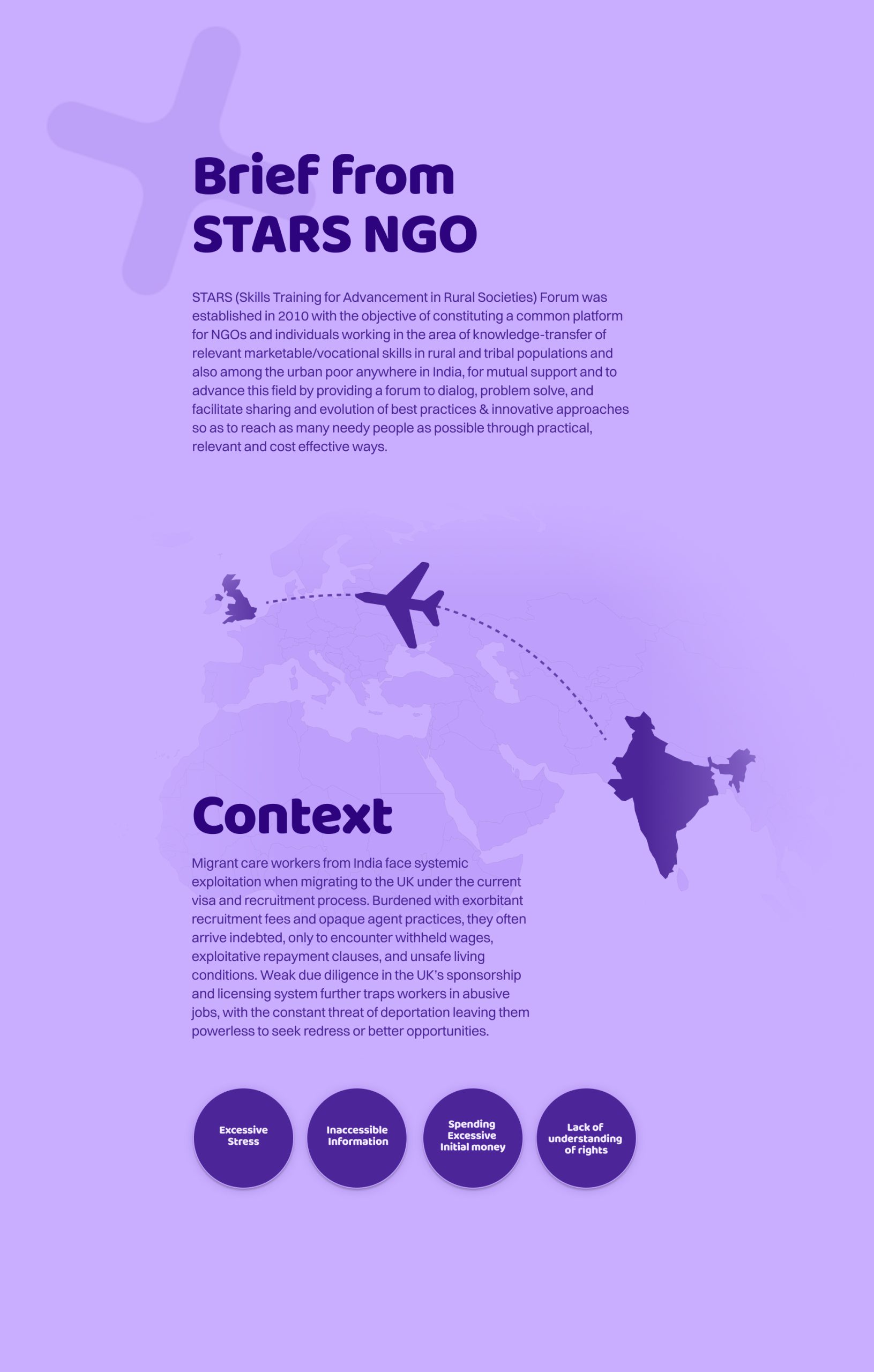
STARS (Skills Training for Advancement in Rural Societies) is a forum established in 2010 to support NGOs and individuals working in skill transfer and livelihood development among rural, tribal, and urban poor populations across India.
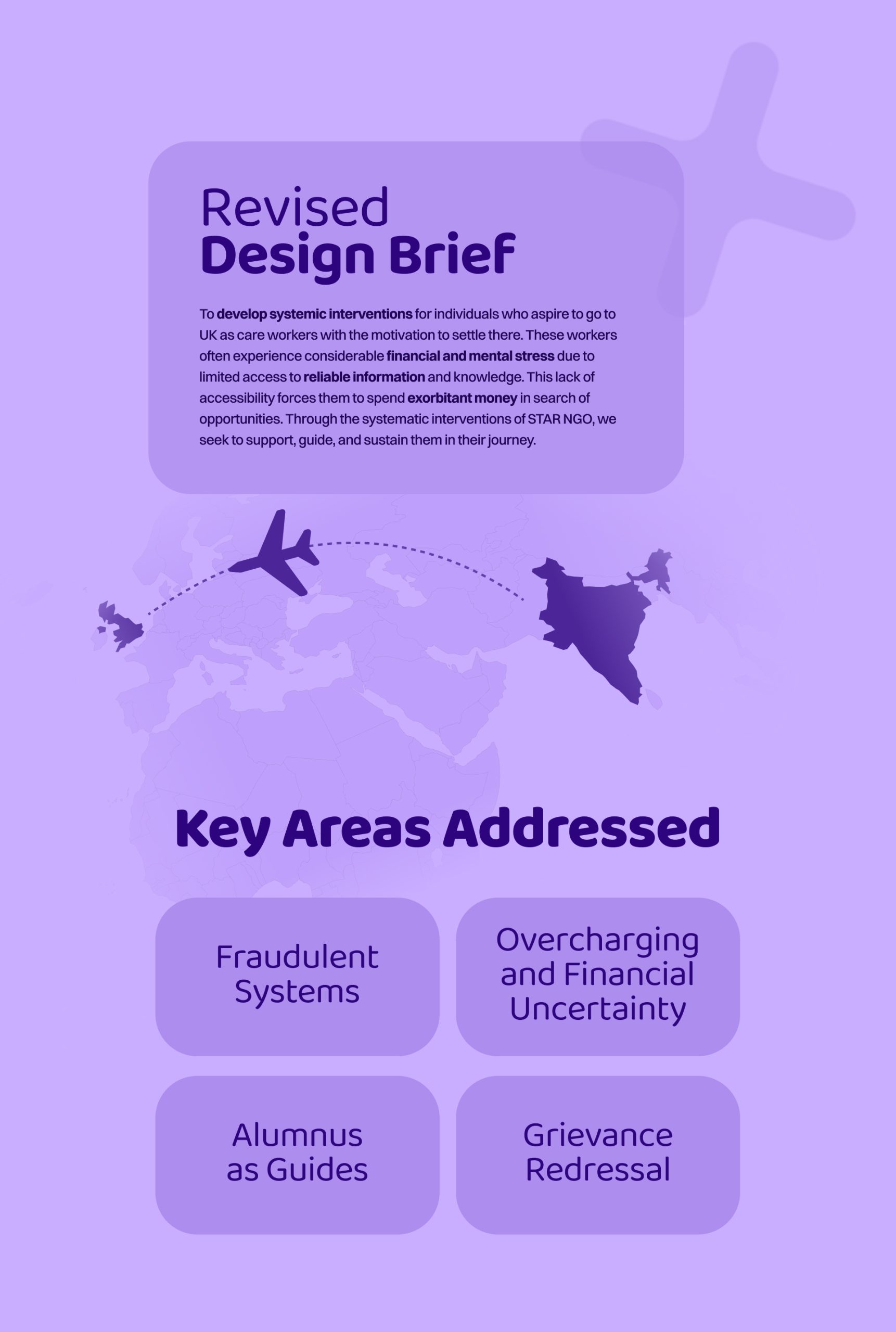
This project focuses on migrant Indian care workers who aspire to move to the UK for employment. Under the current system, many face exploitation, from fraudulent agents and fake job offers to overcharging and unsafe working conditions. This initiative aims to create transparent, systemic interventions that protect workers through verified recruitment channels, fair financial systems, and structured post-arrival support.
This work was developed as part of an academic project exploring service design for social impact, combining systemic thinking, journey mapping, and community-driven intervention design.
Background
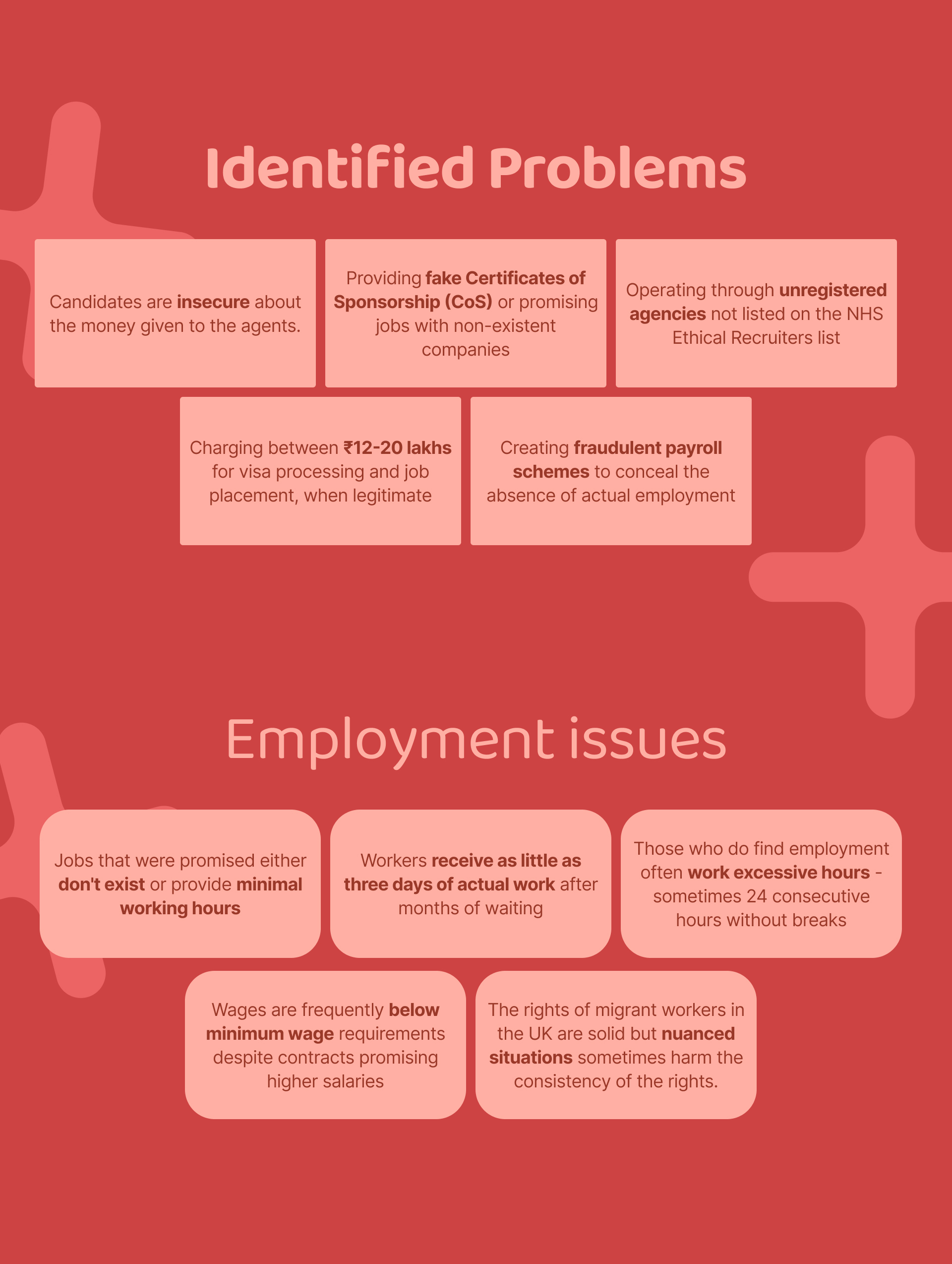
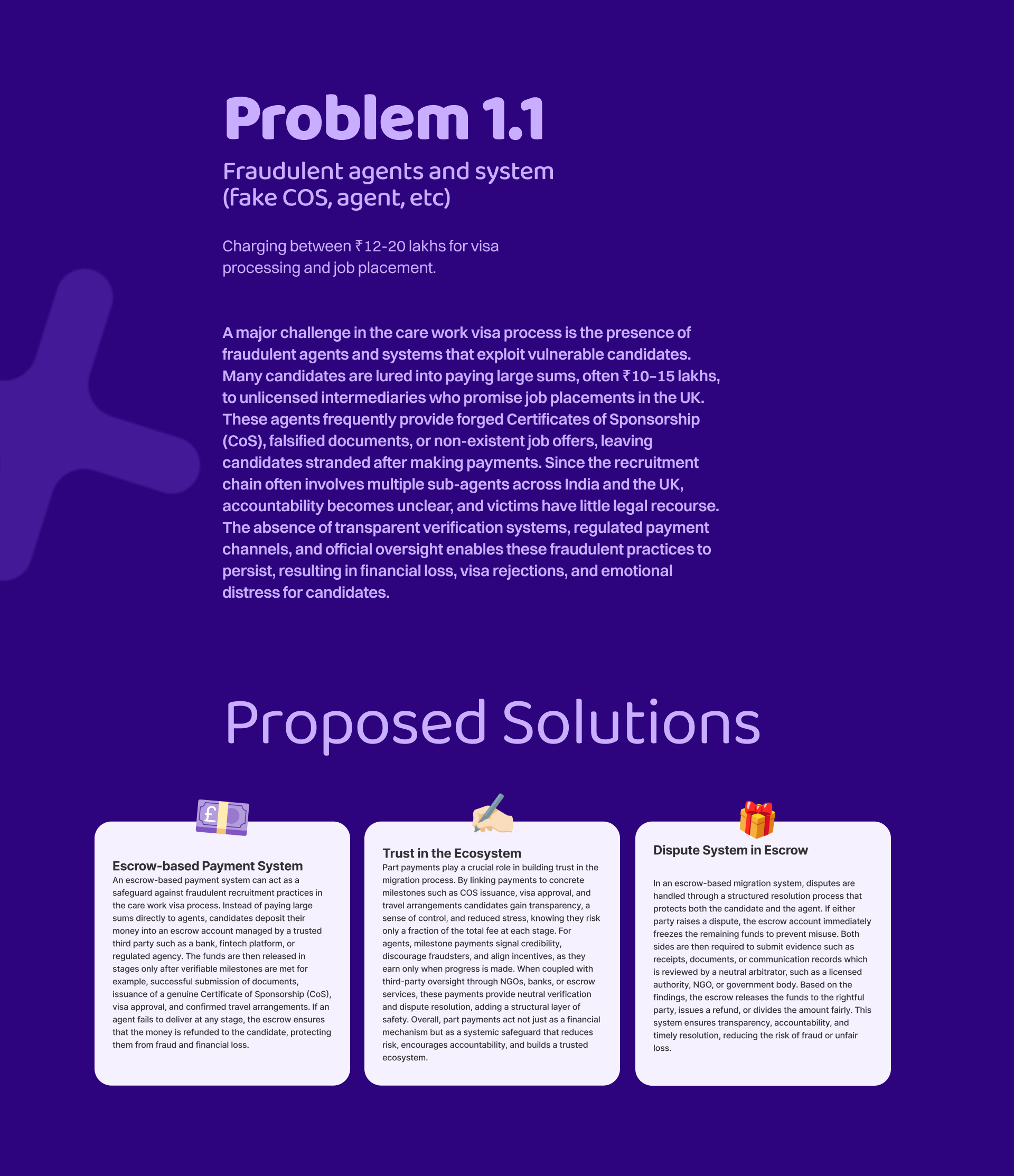
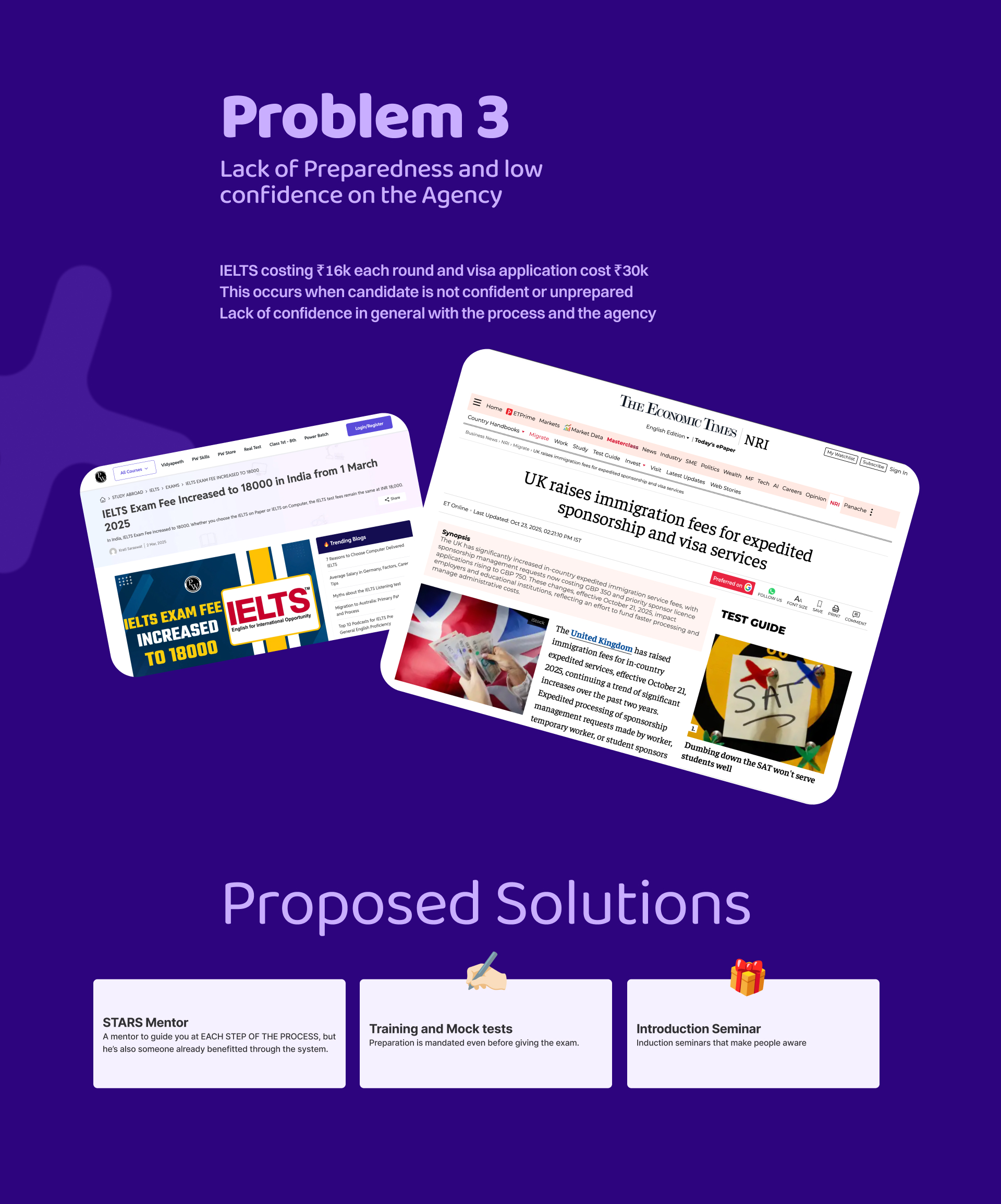
The migration process for Indian care workers is fragmented and opaque. Recruitment often happens through unlicensed agents who charge exorbitant fees (₹10–20 lakhs), provide fake Certificates of Sponsorship (CoS), or promise non-existent jobs. Once abroad, workers face withheld wages, exploitative clauses, and a lack of recourse due to weak governance and fear of deportation. The challenge was to design a transparent ecosystem that ensures trust, safety, and accountability at every stage, from pre-departure verification to post-arrival integration and community support.
Strategy
The project approached the problem systemically, addressing multiple leverage points through design. Key actions included:
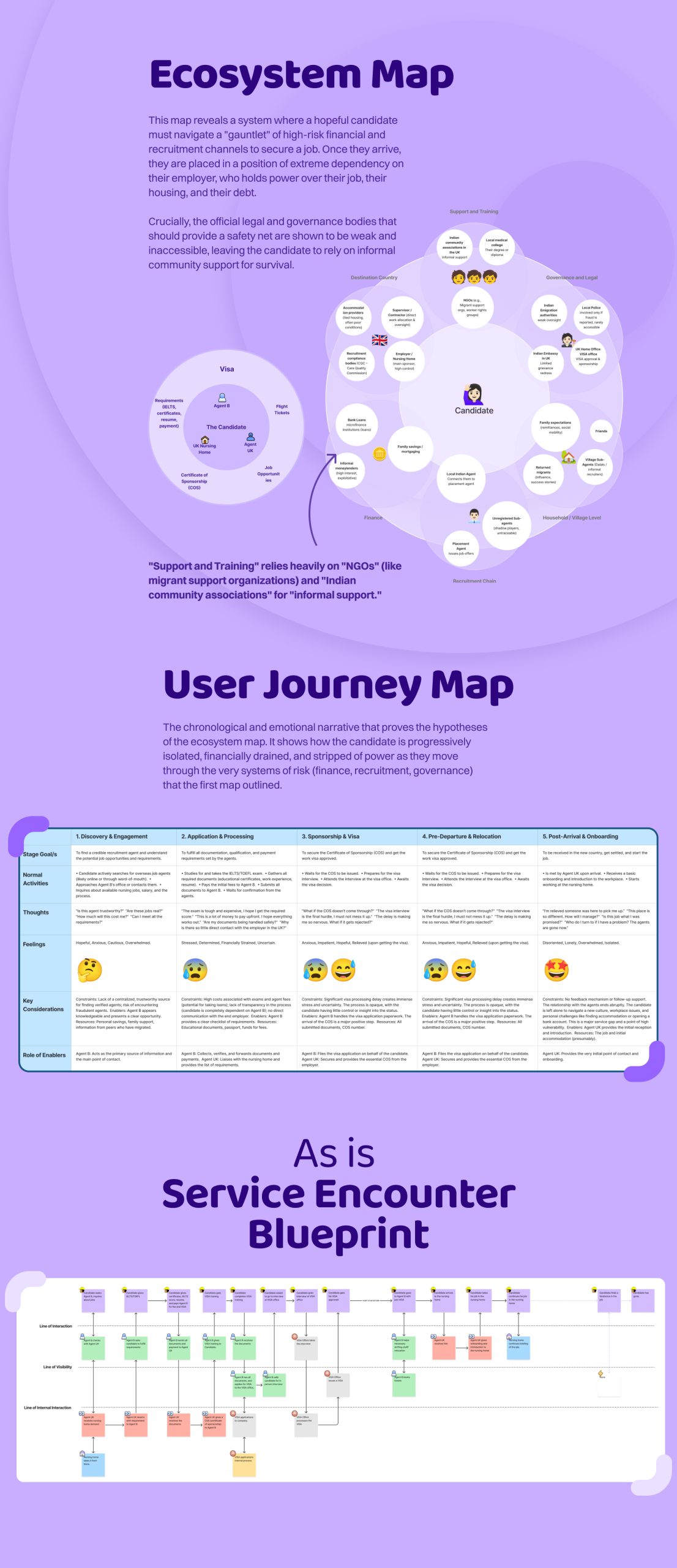
- Mapping the recruitment ecosystem to identify failure points in verification, payment, and support.
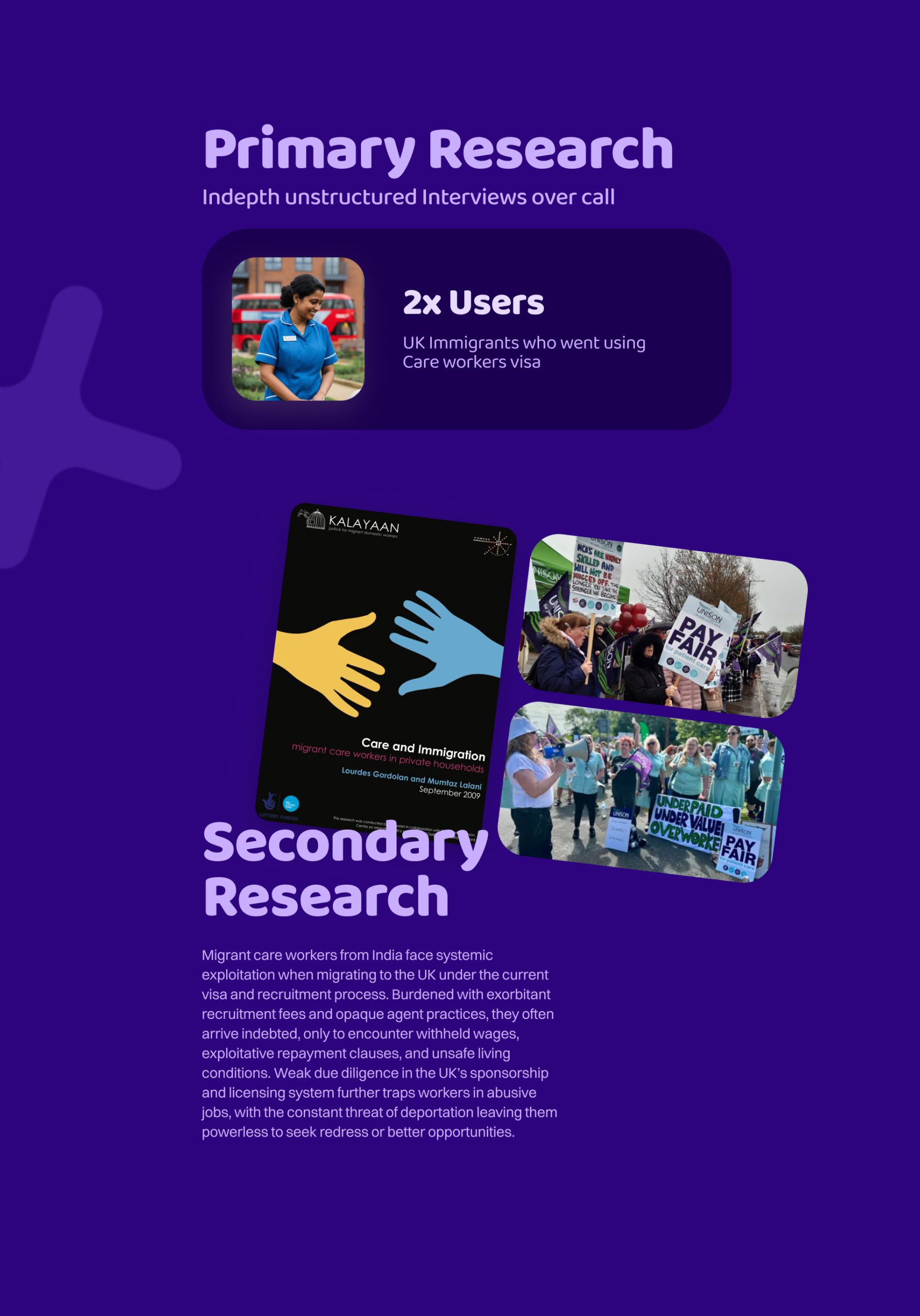
- Primary research with two UK-based migrant caregivers and secondary research into reports like Kalayaan’s Care and Immigration study.
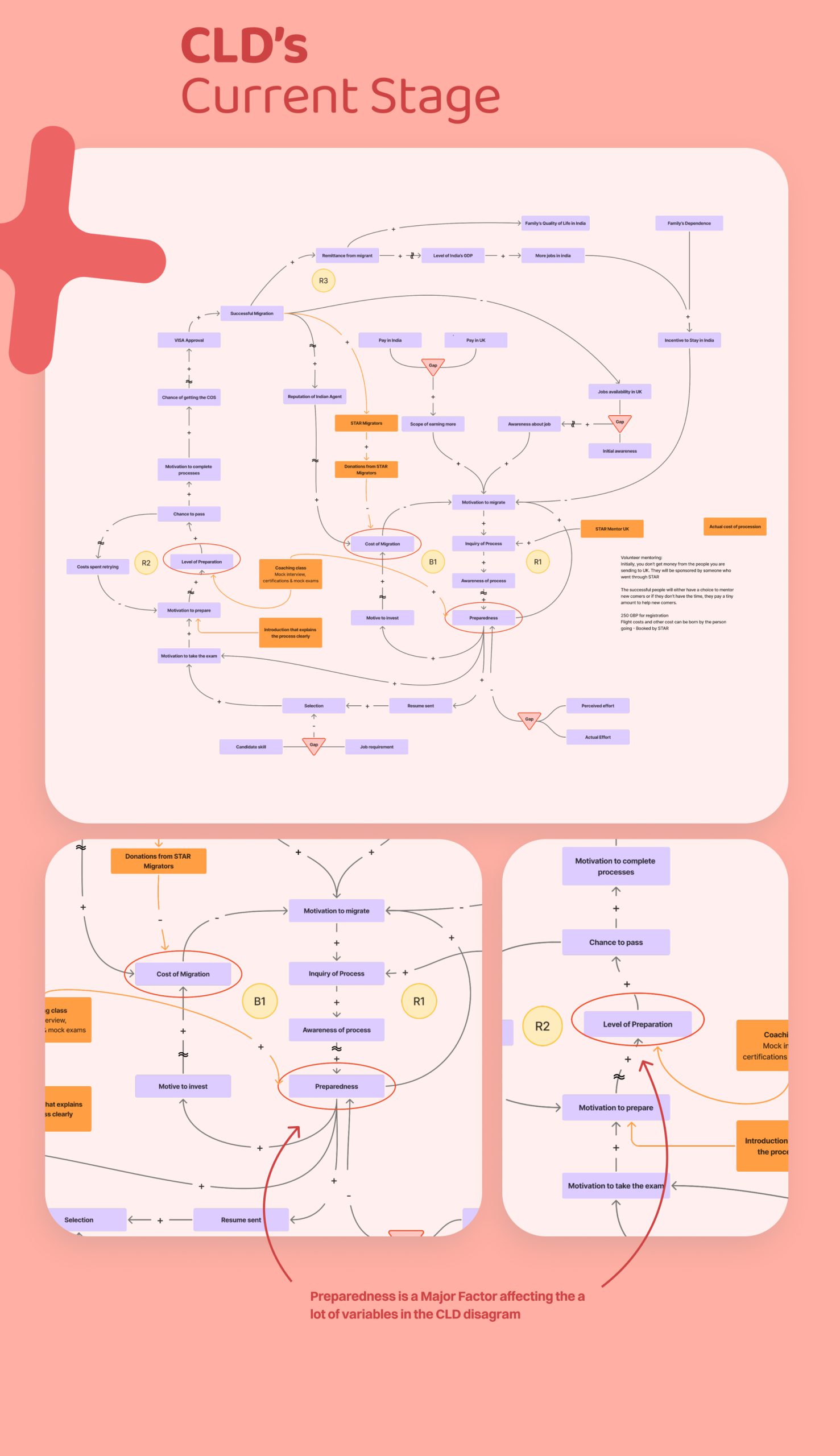
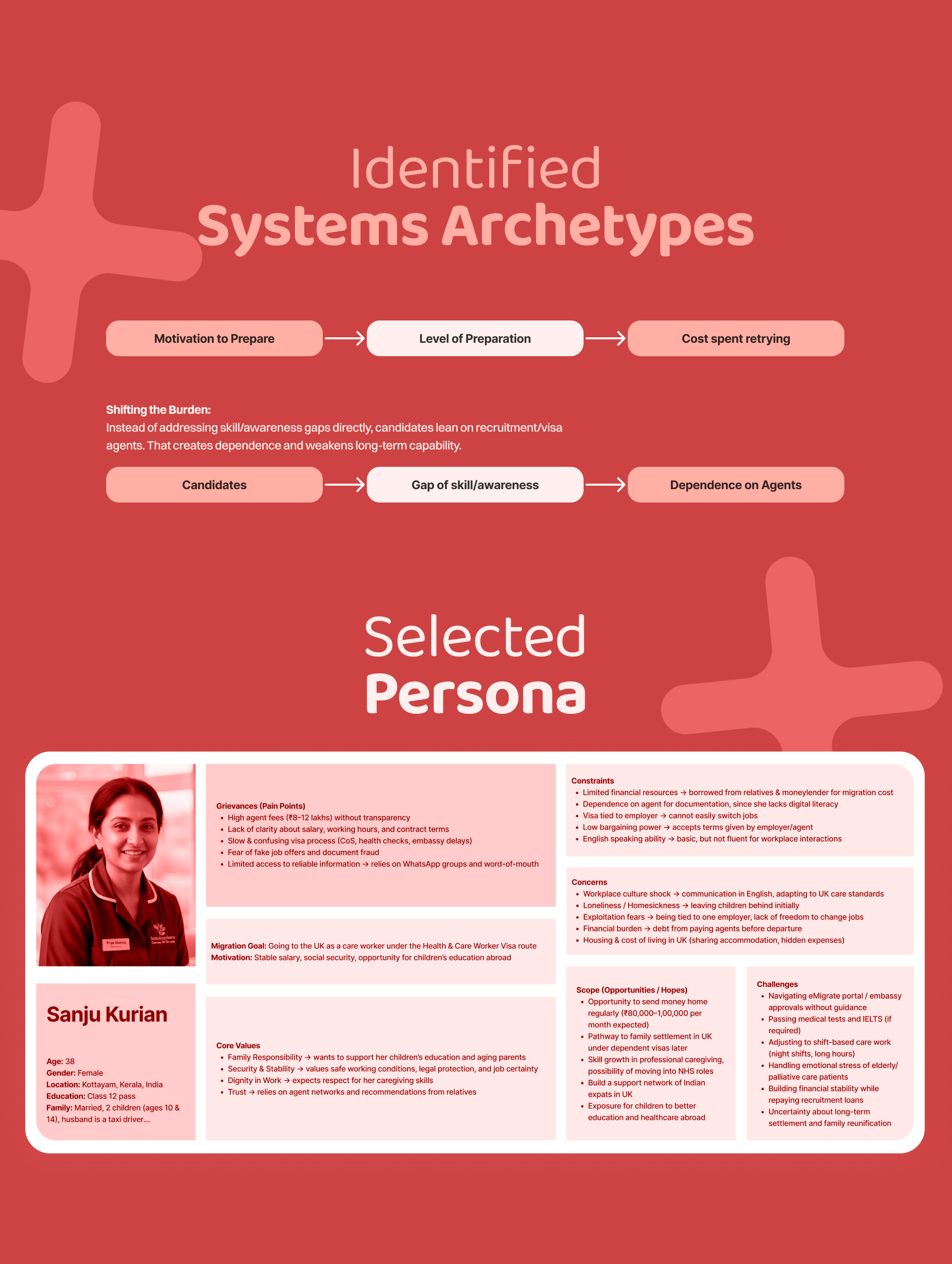
- Identifying systemic archetypes, such as “Shifting the Burden,” showing how candidates rely on agents instead of building self-reliance.
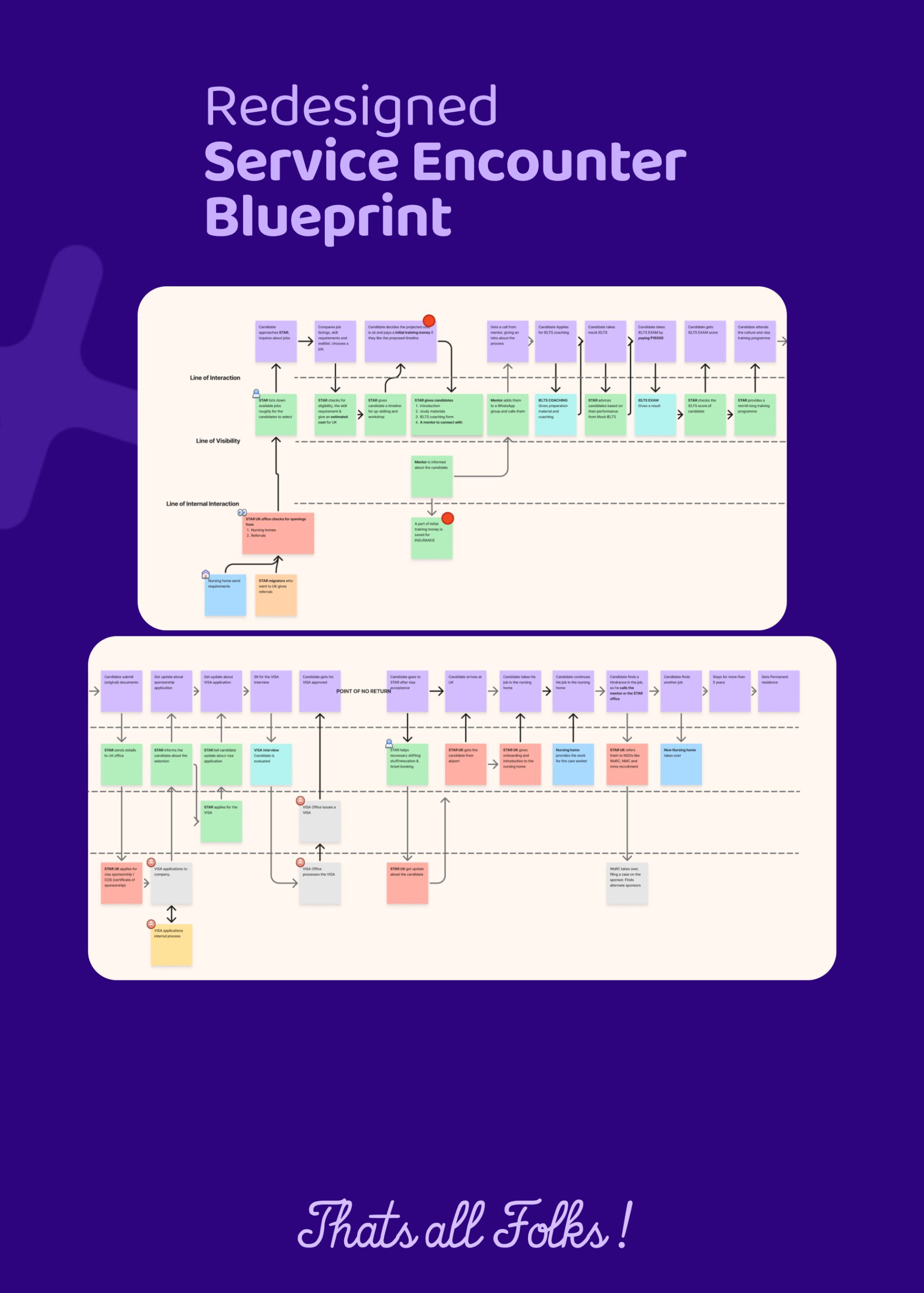
- Designing end-to-end interventions across the migration journey — from information access and payment systems to grievance redressal and alumni engagement.
The goal was to build a trustworthy, scalable migration pipeline that is fair, transparent, and community-supported.
Design
The solution was designed as an integrated service ecosystem under STARS, covering both digital and community-based touchpoints.
Key Components:
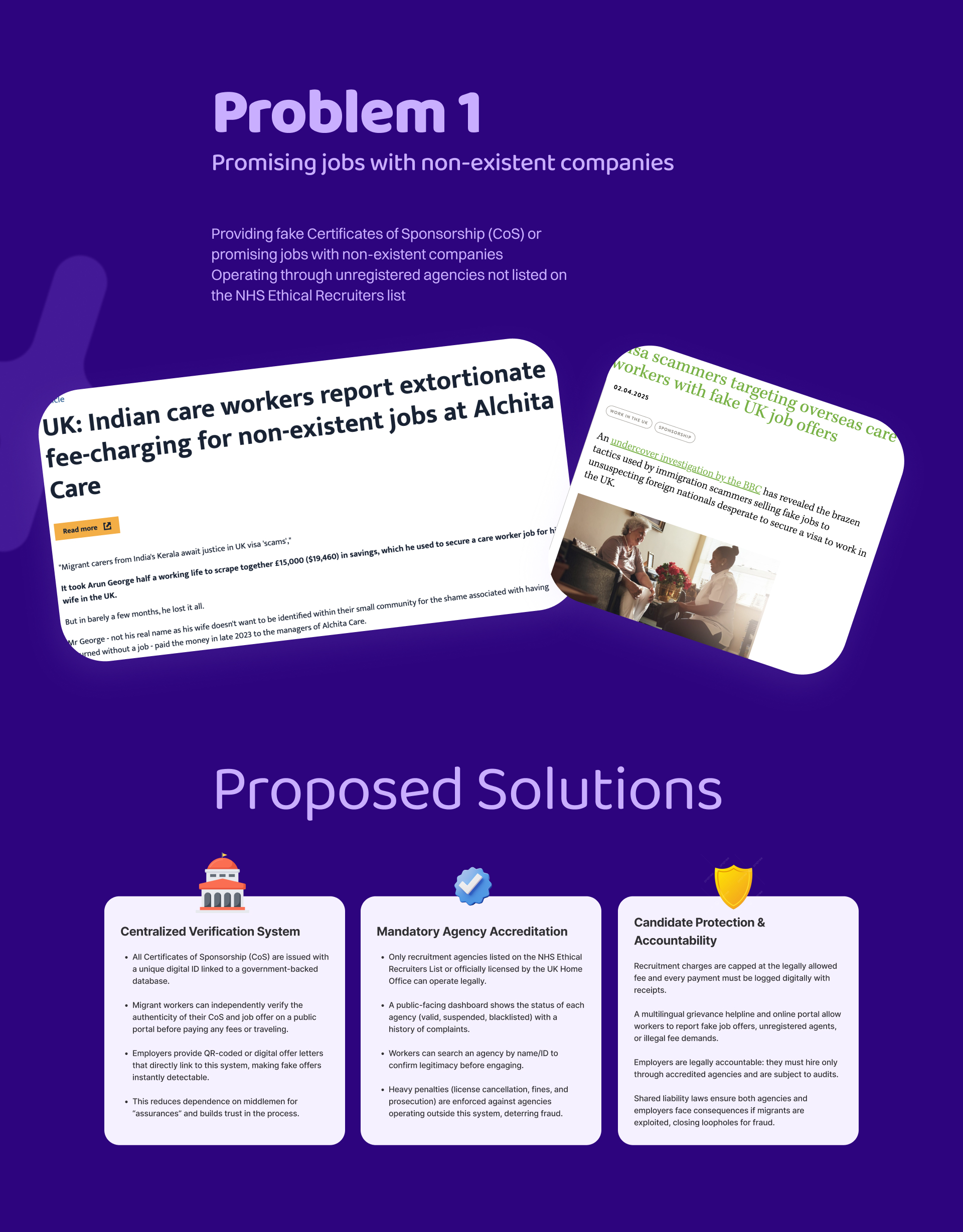
- Centralized Verification System
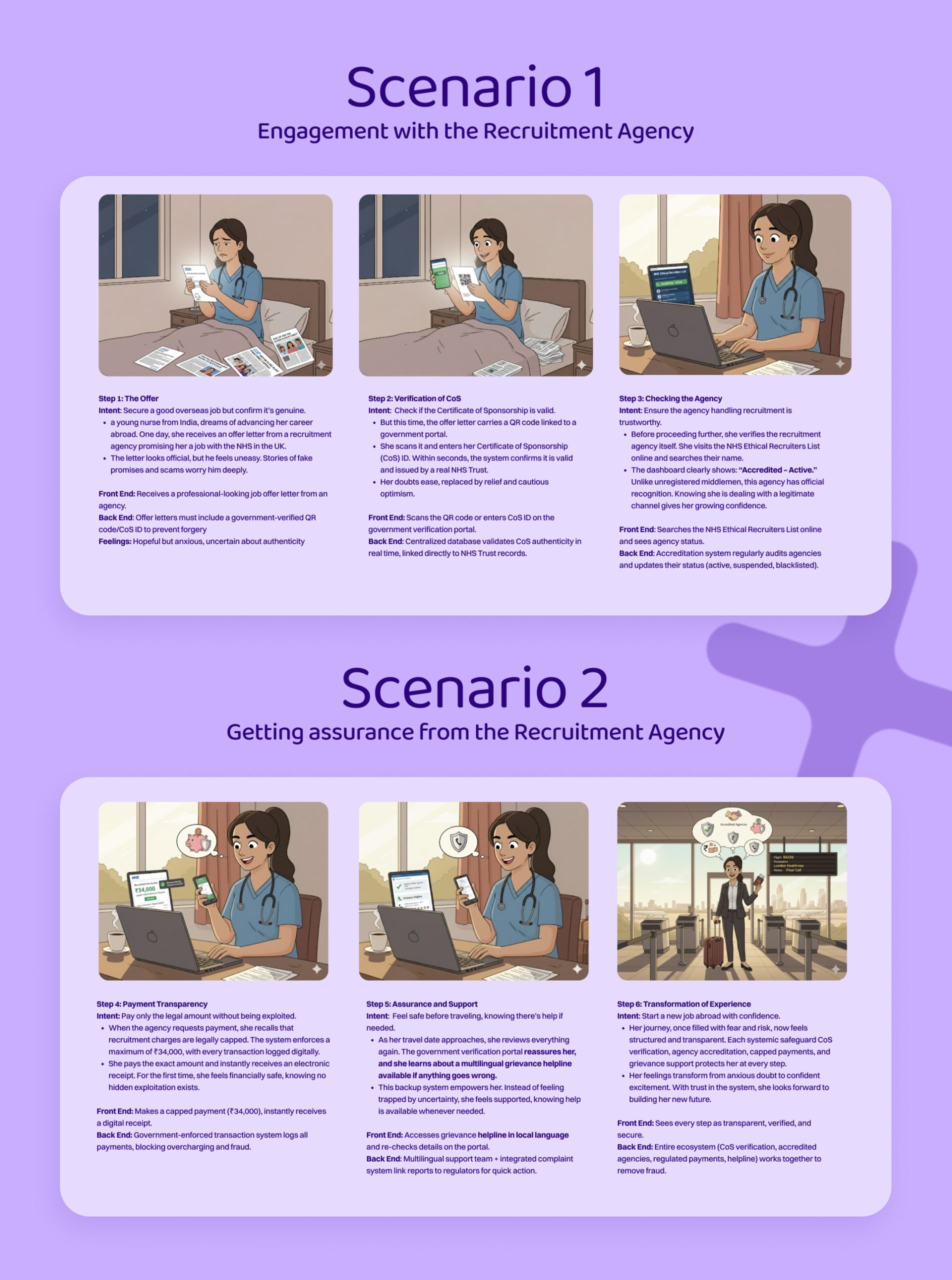
- Each Certificate of Sponsorship (CoS) linked to a government-backed digital ID and public portal for authenticity checks.
- Job offers include QR-coded letters for instant verification, reducing dependency on intermediaries.
- Mandatory Agency Accreditation
- Only NHS-recognized or UK Home Office–licensed agencies can recruit.
- A public dashboard displays agency status (active, suspended, blacklisted).
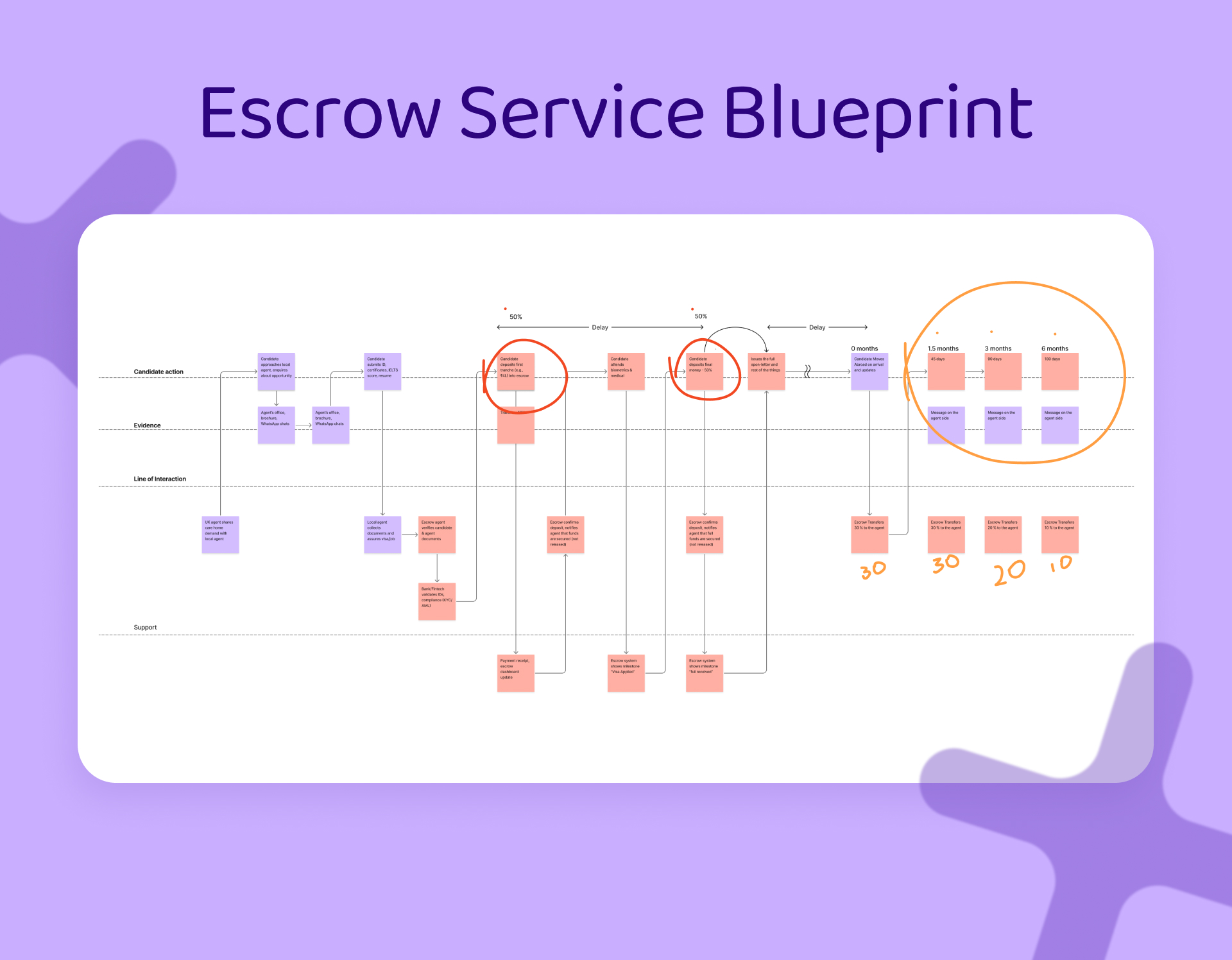
- Escrow-Based Payment System
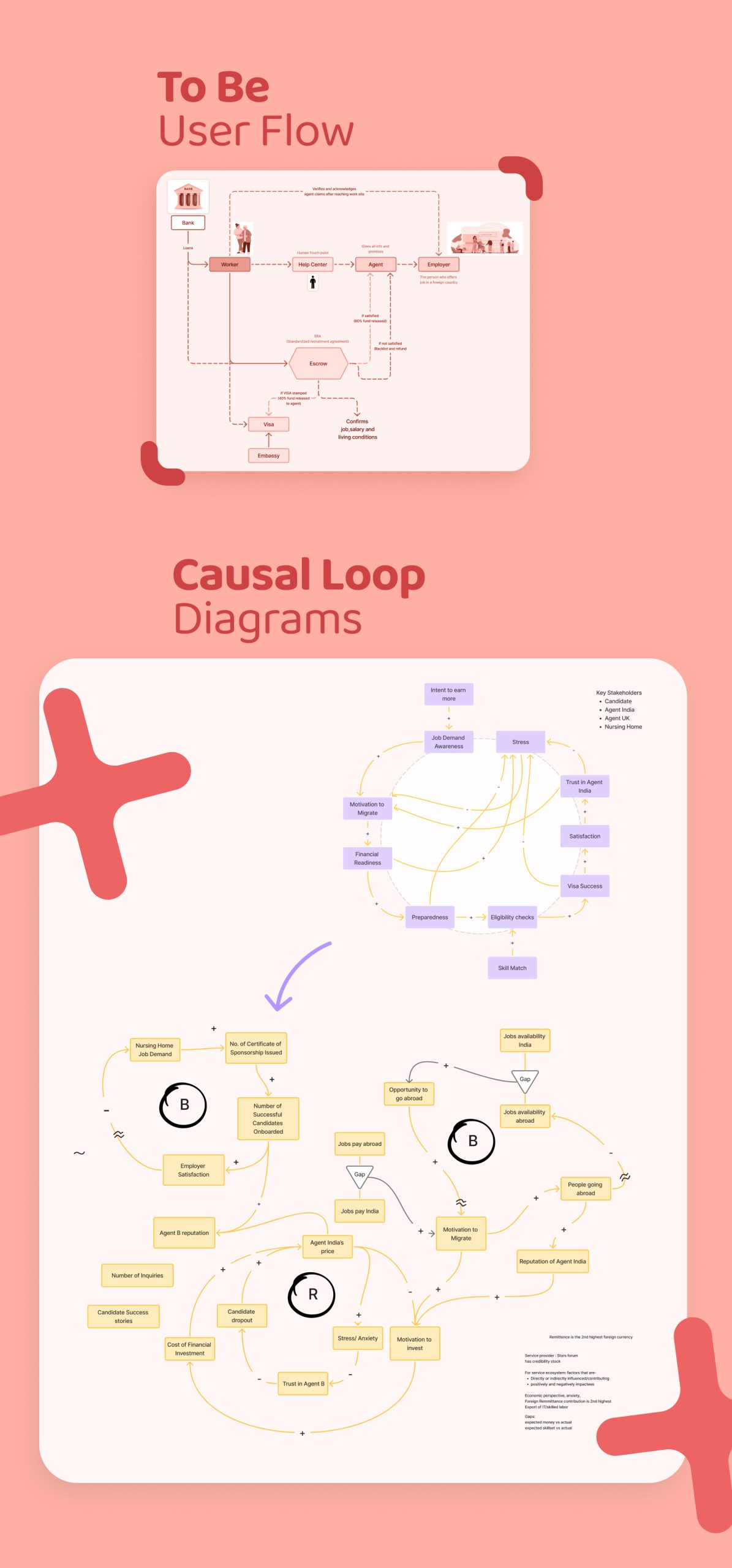
- Candidates deposit fees in escrow, released only when verified milestones (CoS issued, visa approved, travel confirmed) are achieved.
- Includes a dispute-resolution mechanism and transparent refund process.
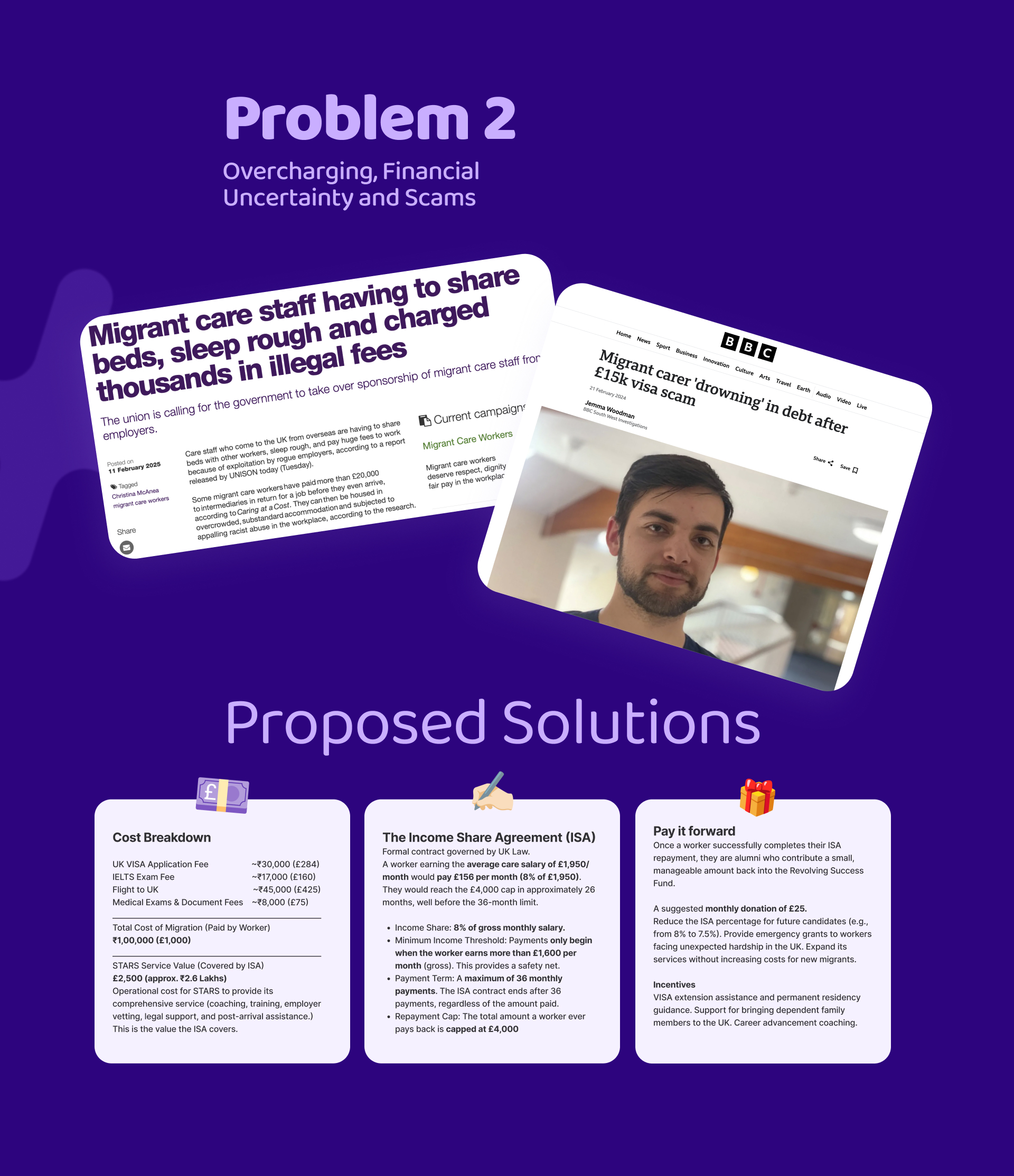
- Income Share Agreement (ISA)
- Workers pay back 8% of their monthly salary once employed, capped at £4,000, ensuring fair repayment without debt traps.
- Alumni can contribute voluntarily (£25/month) to a revolving fund supporting new candidates.
- Mentorship & Community Pods
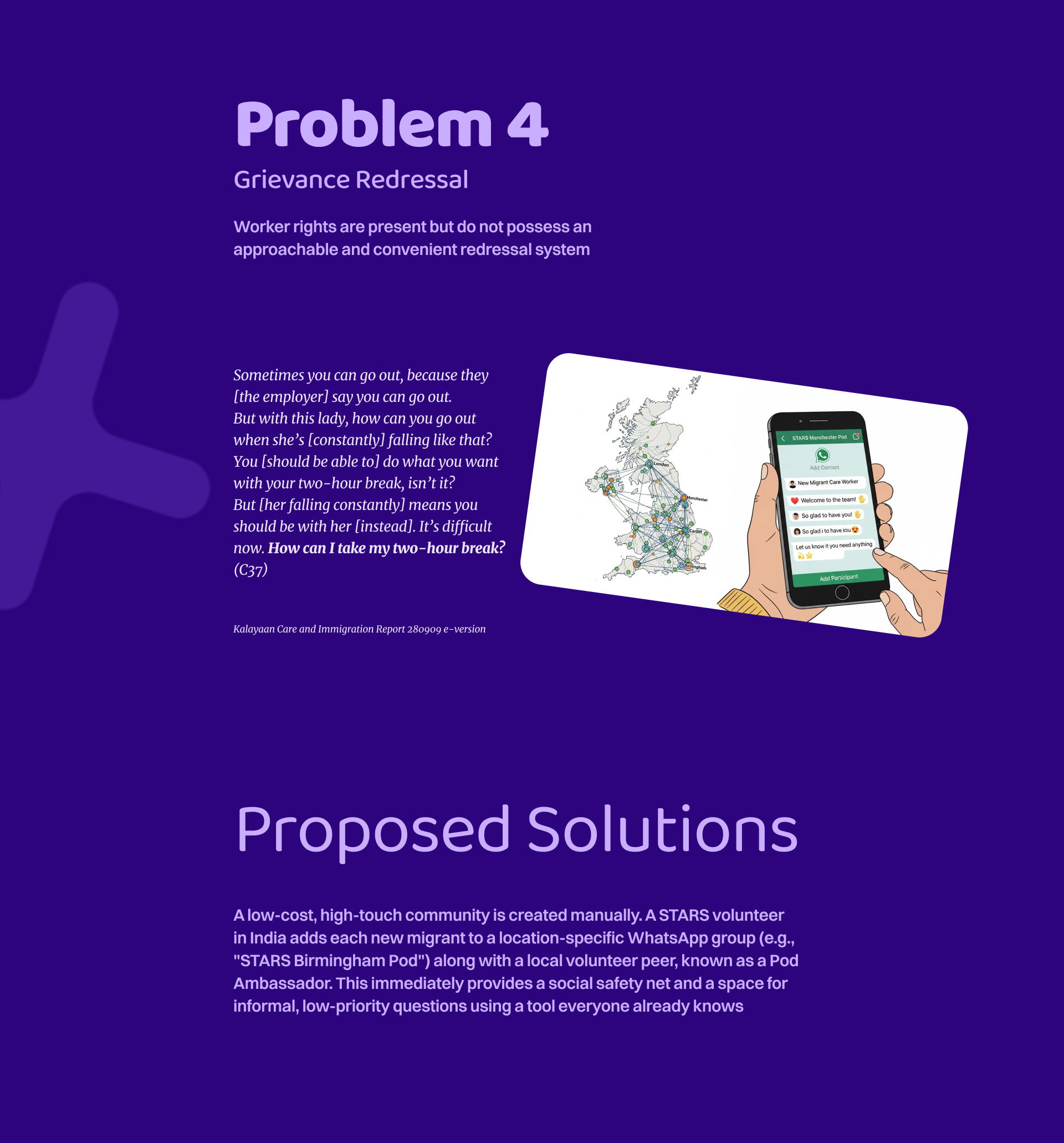
- Each migrant is added to a WhatsApp “Pod” with local peers and a volunteer “Pod Ambassador.”
- Offers everyday support and escalation pathways for emergencies through a multilingual helpline.
- Grievance Redressal System
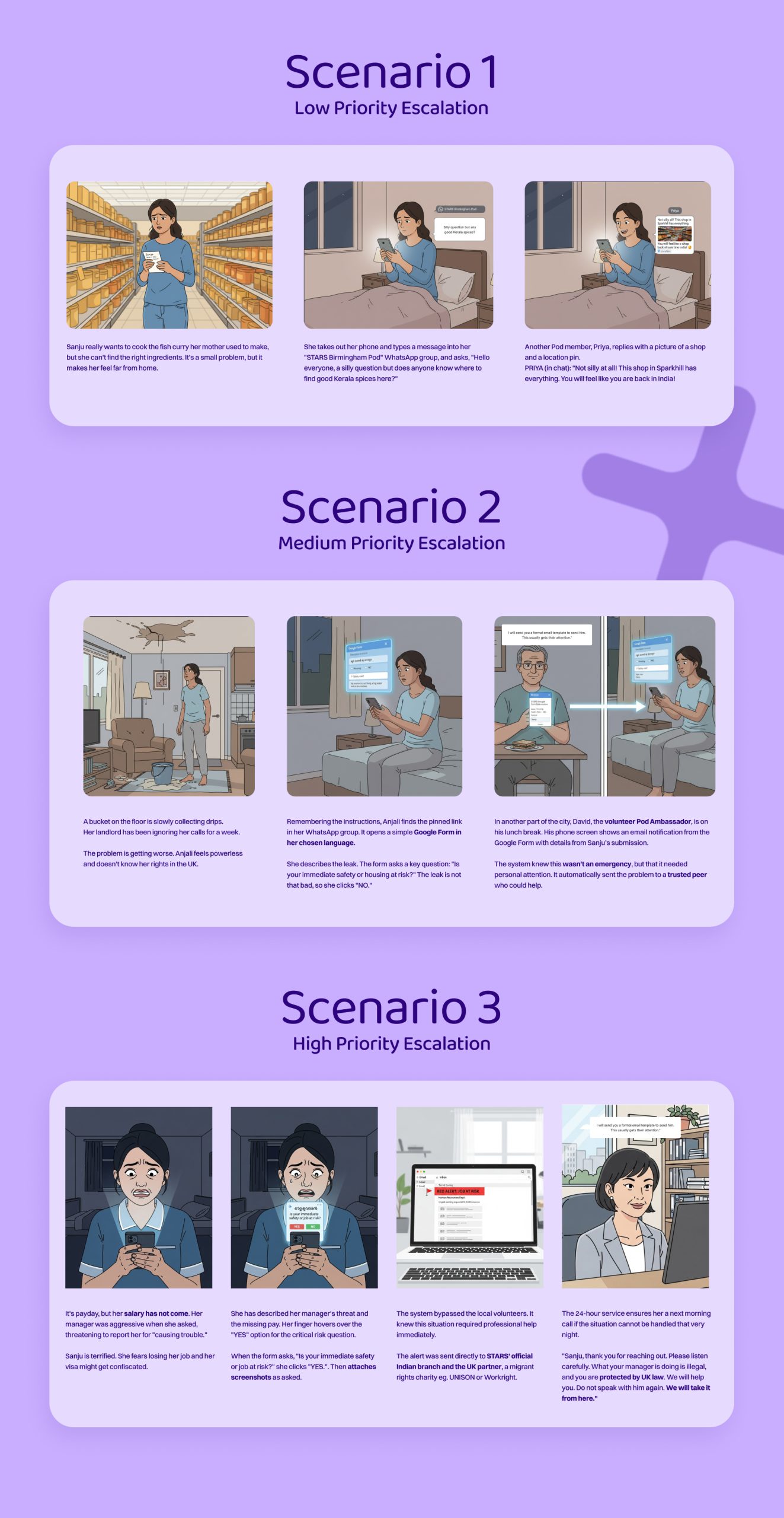
- Tiered escalation structure (low, medium, high priority) with direct links to STARS India, UK partner NGOs, and regulators for urgent cases.
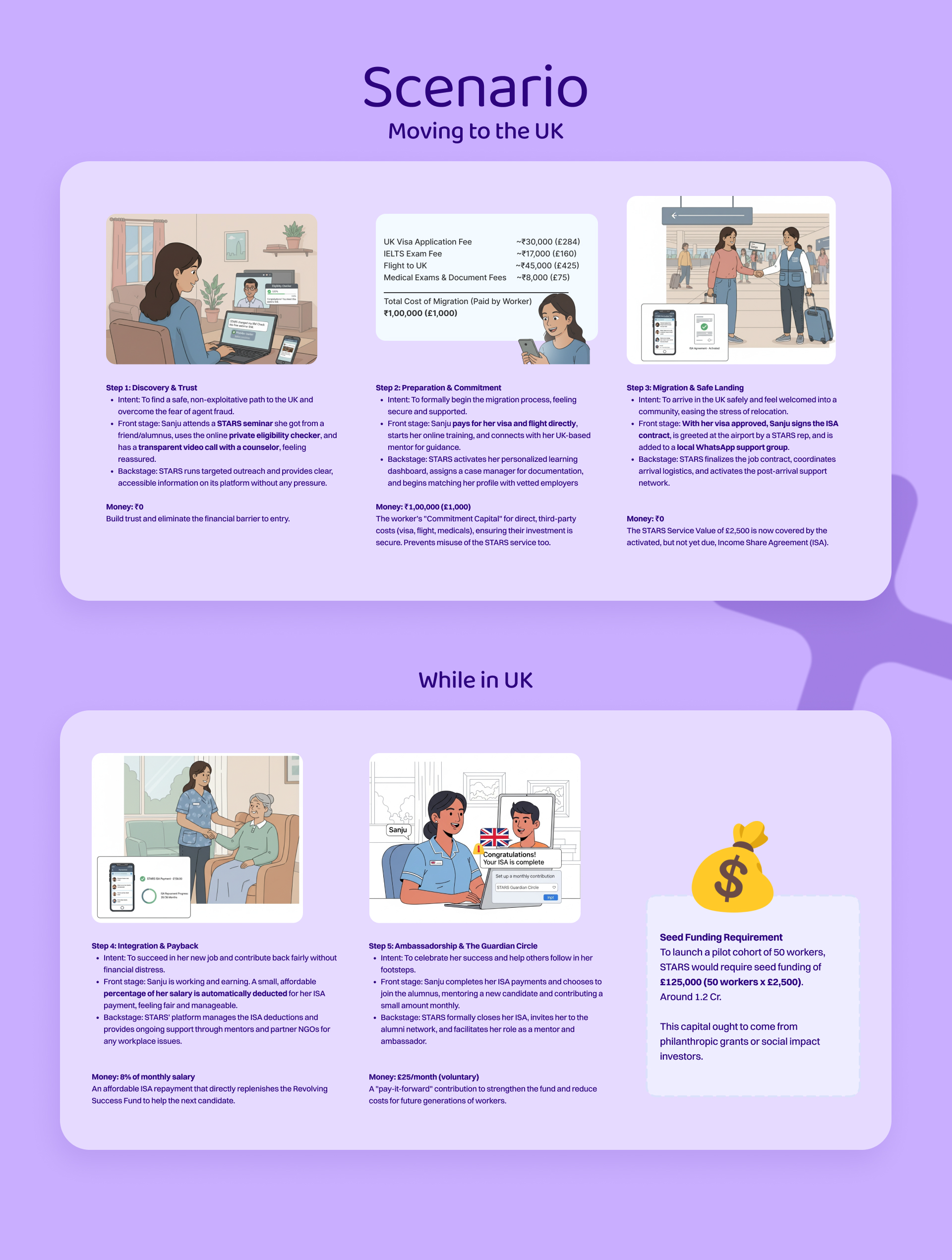
- Journey Stages
- Discovery & Trust – Transparent onboarding, zero-cost eligibility check.
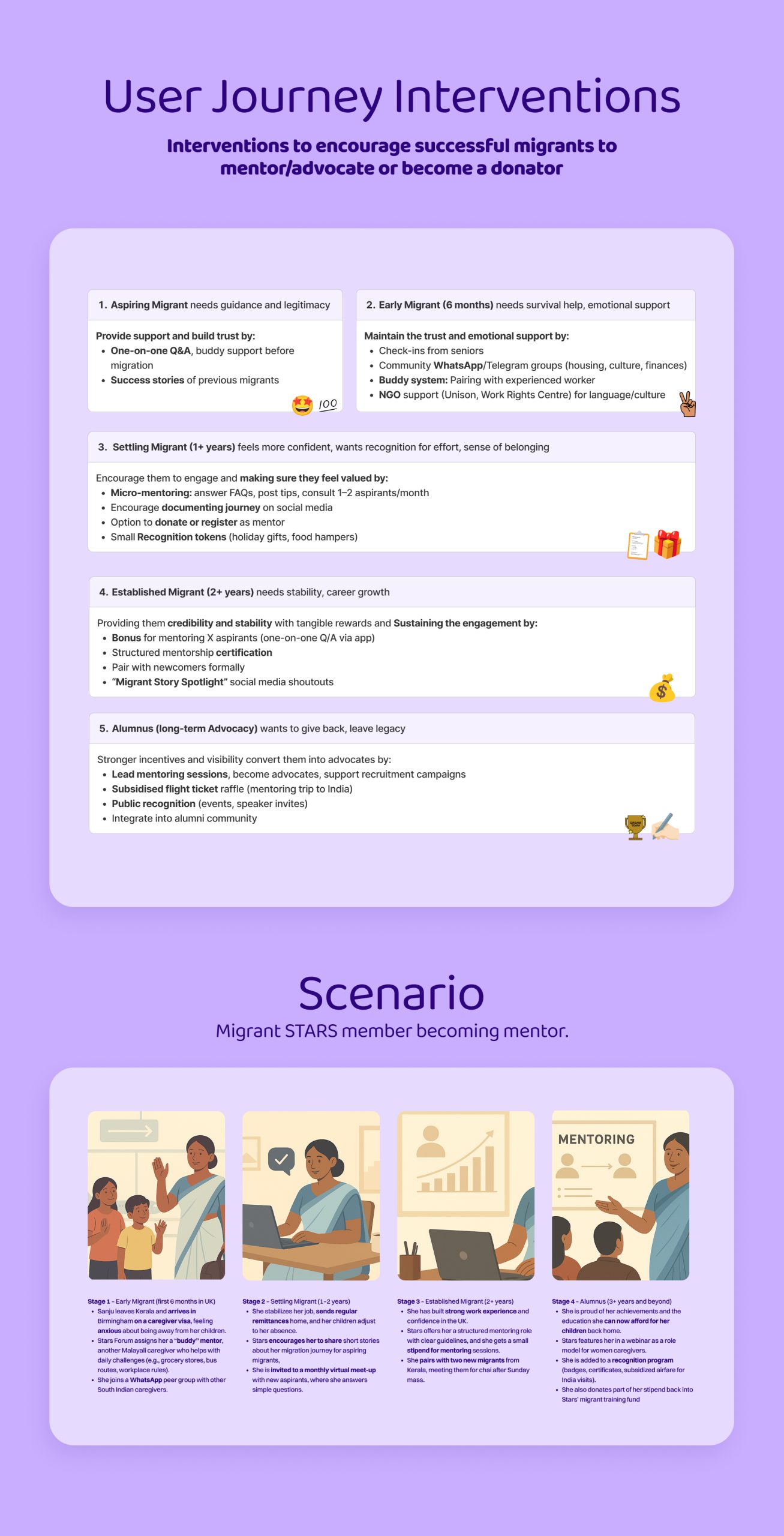
- Preparation & Commitment – Direct visa payments, training, and mentor pairing.
- Migration & Safe Landing – Verified travel and onboarding into support networks.
- Integration & Payback – ISA repayment with ongoing mentoring.
- Ambassadorship – Alumni mentor new candidates and contribute to sustainability.
Results
The designed system restructures how migration is handled, turning an opaque, agent-driven process into a transparent, community-supported ecosystem.
By introducing digital verification, escrow safeguards, and alumni mentorship, STARS ensures that migrants experience safety, dignity, and trust throughout their journey.
The project demonstrates how service design can intervene systemically to protect vulnerable workers by combining policy, digital infrastructure, and grassroots community engagement.
If implemented, the model could drastically reduce fraud, financial exploitation, and emotional distress, transforming the migration experience from one of fear and uncertainty to empowerment and shared growth.
Project Details
STARS NGO
India to UK
Guided by
Prof. Ravi Mahamuni
Collaborators
Libny Patrik
Abhishek Benny
Arindam KD
Muskan Ahuja
Service Design
Behaviour Change
Causal Loop Diagrams
Background
The migration process for Indian care workers is fragmented and opaque. Recruitment often happens through unlicensed agents who charge exorbitant fees (₹10–20 lakhs), provide fake Certificates of Sponsorship (CoS), or promise non-existent jobs. Once abroad, workers face withheld wages, exploitative clauses, and a lack of recourse due to weak governance and fear of deportation. The challenge was to design a transparent ecosystem that ensures trust, safety, and accountability at every stage, from pre-departure verification to post-arrival integration and community support.
Strategy
The project approached the problem systemically, addressing multiple leverage points through design. Key actions included:
- Mapping the recruitment ecosystem to identify failure points in verification, payment, and support.
- Primary research with two UK-based migrant caregivers and secondary research into reports like Kalayaan’s Care and Immigration study.
- Identifying systemic archetypes, such as “Shifting the Burden,” showing how candidates rely on agents instead of building self-reliance.
- Designing end-to-end interventions across the migration journey — from information access and payment systems to grievance redressal and alumni engagement.
The goal was to build a trustworthy, scalable migration pipeline that is fair, transparent, and community-supported.
Design
The solution was designed as an integrated service ecosystem under STARS, covering both digital and community-based touchpoints.
Key Components:
- Centralized Verification System
- Each Certificate of Sponsorship (CoS) linked to a government-backed digital ID and public portal for authenticity checks.
- Job offers include QR-coded letters for instant verification, reducing dependency on intermediaries.
- Mandatory Agency Accreditation
- Only NHS-recognized or UK Home Office–licensed agencies can recruit.
- A public dashboard displays agency status (active, suspended, blacklisted).
- Escrow-Based Payment System
- Candidates deposit fees in escrow, released only when verified milestones (CoS issued, visa approved, travel confirmed) are achieved.
- Includes a dispute-resolution mechanism and transparent refund process.
- Income Share Agreement (ISA)
- Workers pay back 8% of their monthly salary once employed, capped at £4,000, ensuring fair repayment without debt traps.
- Alumni can contribute voluntarily (£25/month) to a revolving fund supporting new candidates.
- Mentorship & Community Pods
- Each migrant is added to a WhatsApp “Pod” with local peers and a volunteer “Pod Ambassador.”
- Offers everyday support and escalation pathways for emergencies through a multilingual helpline.
- Grievance Redressal System
- Tiered escalation structure (low, medium, high priority) with direct links to STARS India, UK partner NGOs, and regulators for urgent cases.
- Journey Stages
- Discovery & Trust – Transparent onboarding, zero-cost eligibility check.
- Preparation & Commitment – Direct visa payments, training, and mentor pairing.
- Migration & Safe Landing – Verified travel and onboarding into support networks.
- Integration & Payback – ISA repayment with ongoing mentoring.
- Ambassadorship – Alumni mentor new candidates and contribute to sustainability.
Results
The designed system restructures how migration is handled, turning an opaque, agent-driven process into a transparent, community-supported ecosystem.
By introducing digital verification, escrow safeguards, and alumni mentorship, STARS ensures that migrants experience safety, dignity, and trust throughout their journey.
The project demonstrates how service design can intervene systemically to protect vulnerable workers by combining policy, digital infrastructure, and grassroots community engagement.
If implemented, the model could drastically reduce fraud, financial exploitation, and emotional distress, transforming the migration experience from one of fear and uncertainty to empowerment and shared growth.
“Good design is when transparency replaces trust.”
Alan Cooper
(Father of Visual Basic)