Designing a Service for a renowned NGO to Enable Long-term Expert Volunteer engagement
Engaging Experts in NGOs
Guided by
Prof. Pramod Khambete
Service Design
Platform Design
Journey Mapping
Contextual Inquiry
Service Blueprints
AI tools & design
AI Prototyping
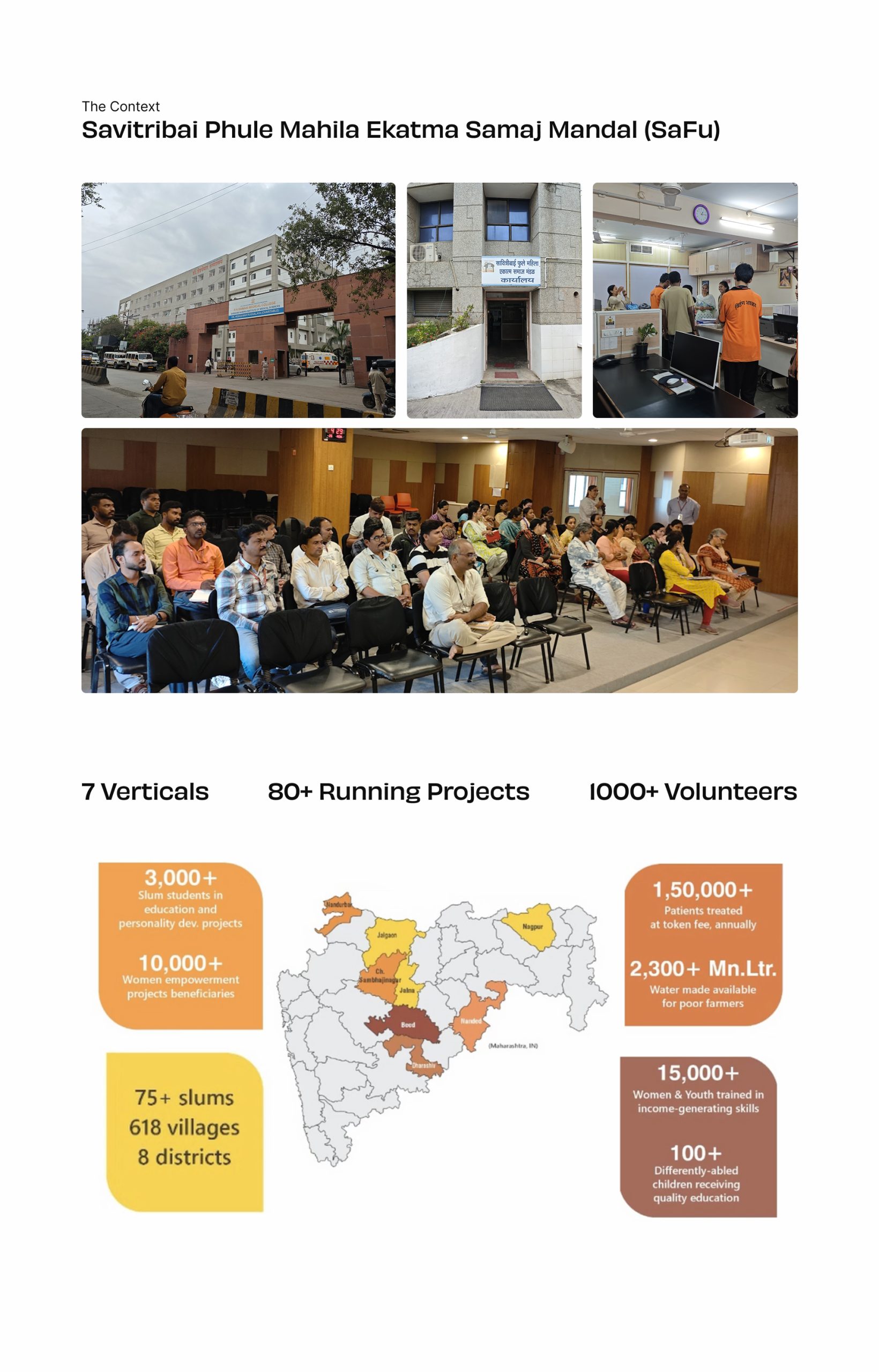
SaFu (Savitri Bai Phule Mahila Ekatma Samaj Mandal) is a Pune-based organisation working across multiple verticals, including women’s empowerment, community development, school construction, and local livelihood initiatives.
The NGO relies heavily on expert volunteers—architects, engineers, educators, domain specialists—who help strengthen ongoing projects by offering technical and strategic guidance.
However, the organisation functions informally, and there is no structured way to coordinate, track, or sustain the engagement of these experts. This project develops a service-design intervention to create stronger relationships, clearer processes, and a system that supports long-term involvement.
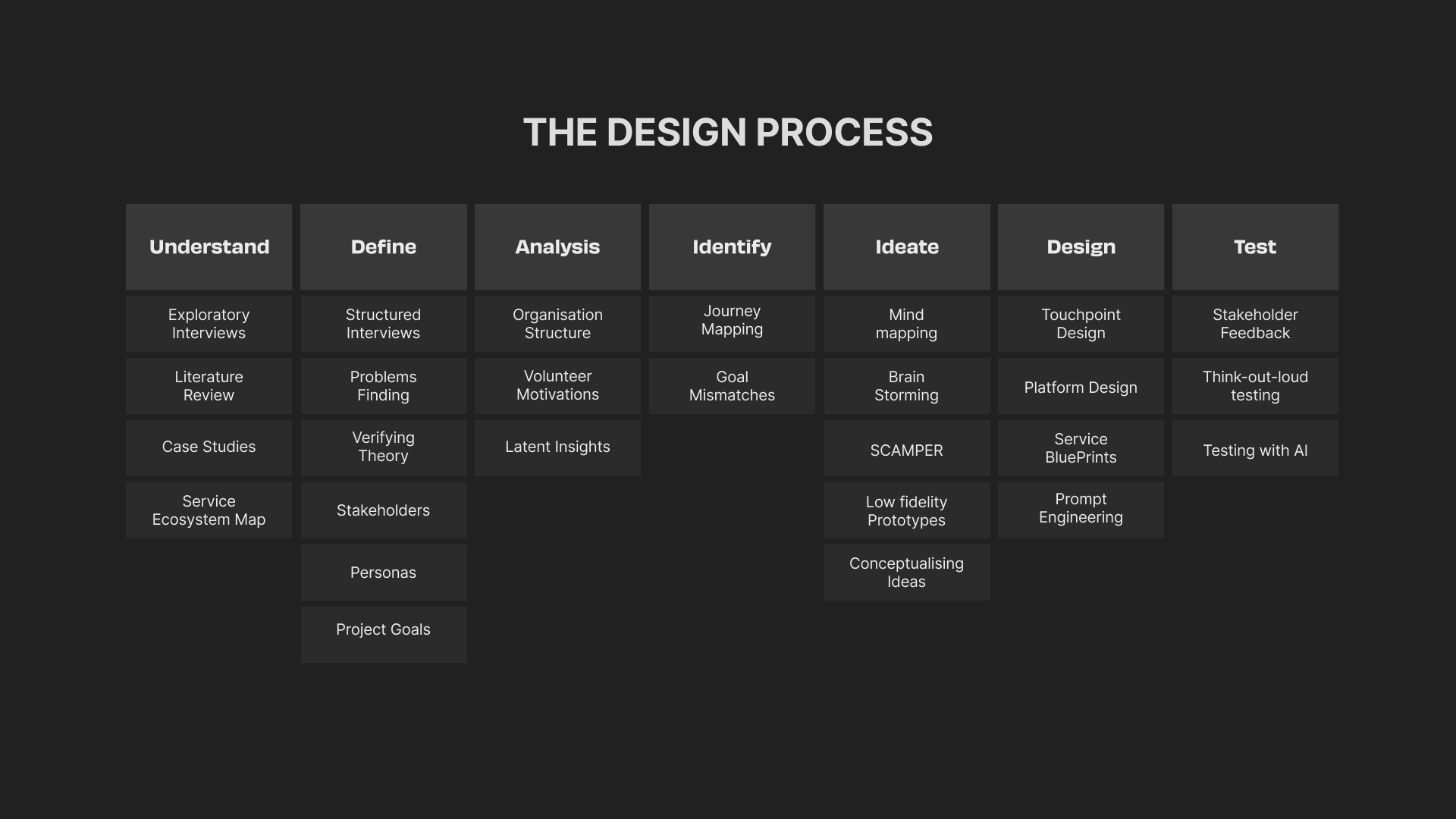
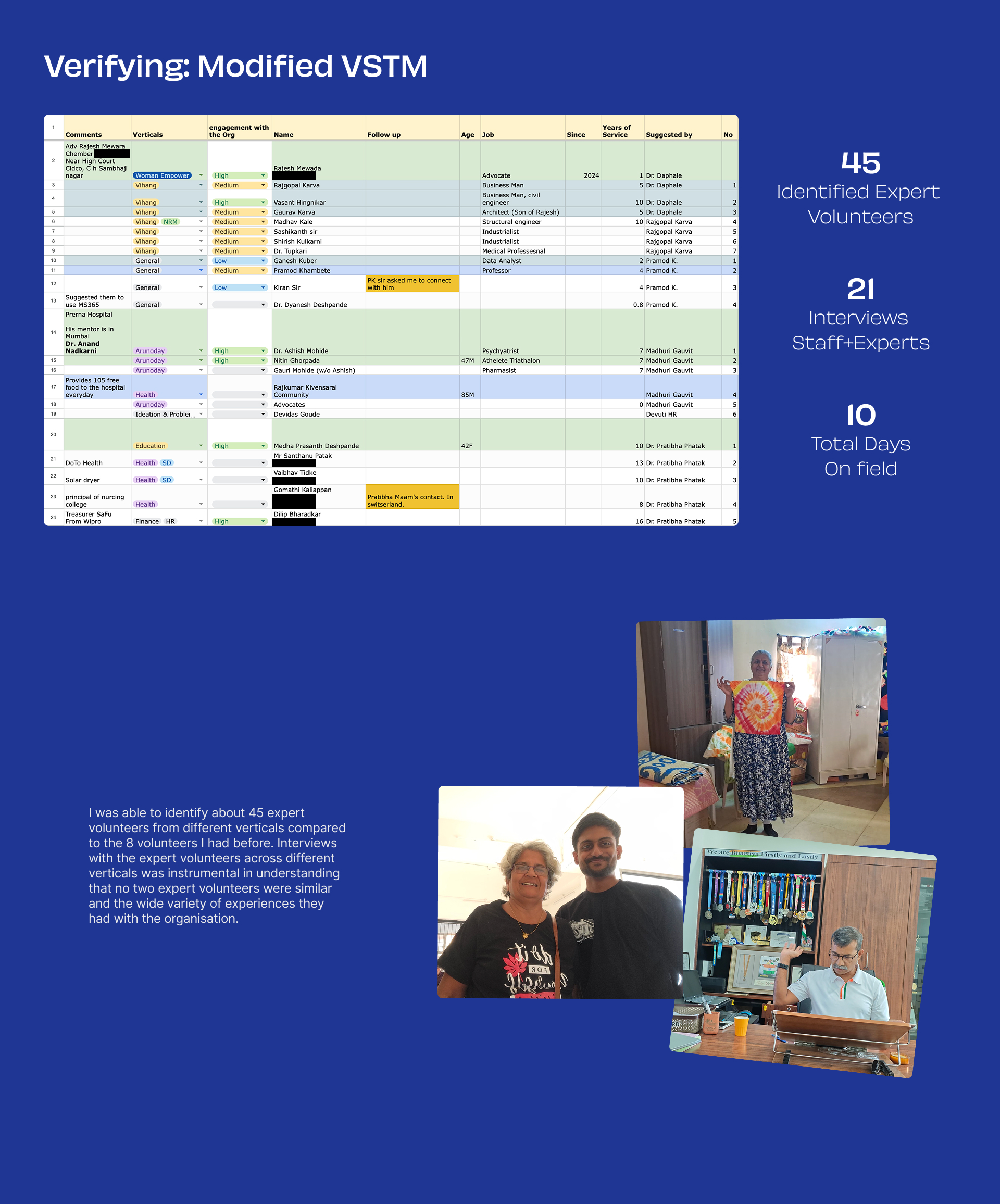
The work uses systems thinking, interviews, ecosystem mapping, blueprinting, and journey analysis.
Background
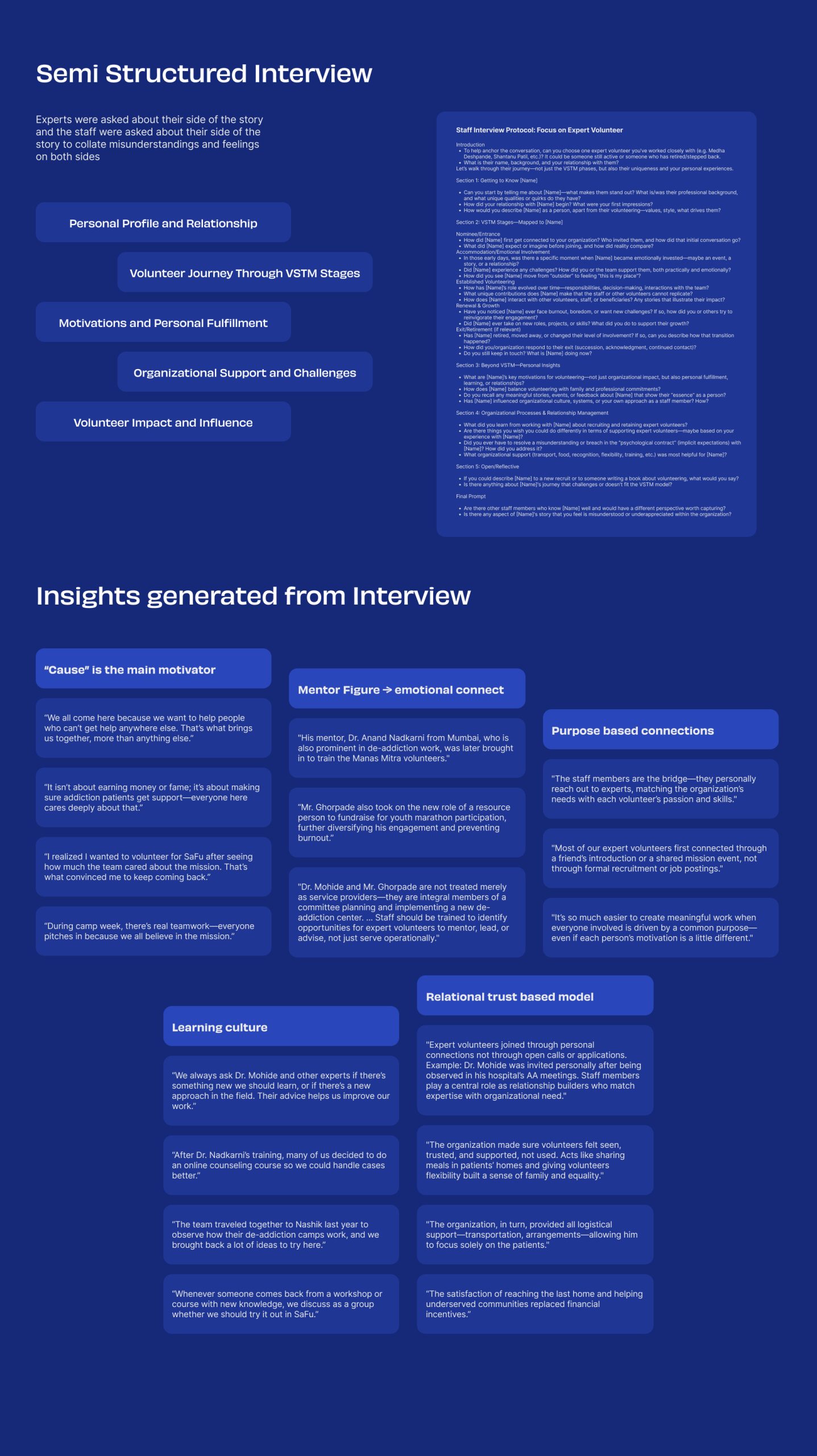
From interviews with SaFu staff and multiple expert volunteers, several recurring issues surfaced:
- There is no formal system to record expert work, track progress, or maintain continuity.
- Communication is inconsistent; subtle cues are often missed, creating frustration on both sides.
- Experts feel disconnected because updates stop once they leave the field site.
- Staff feel hesitant and overwhelmed, needing hand-holding but not receiving steady guidance.
- Organisational goals shift rapidly due to an informal structure; this creates mismatched expectations.
- Volunteers enjoy contributing but often lose rhythm due to lack of project clarity and follow-ups.
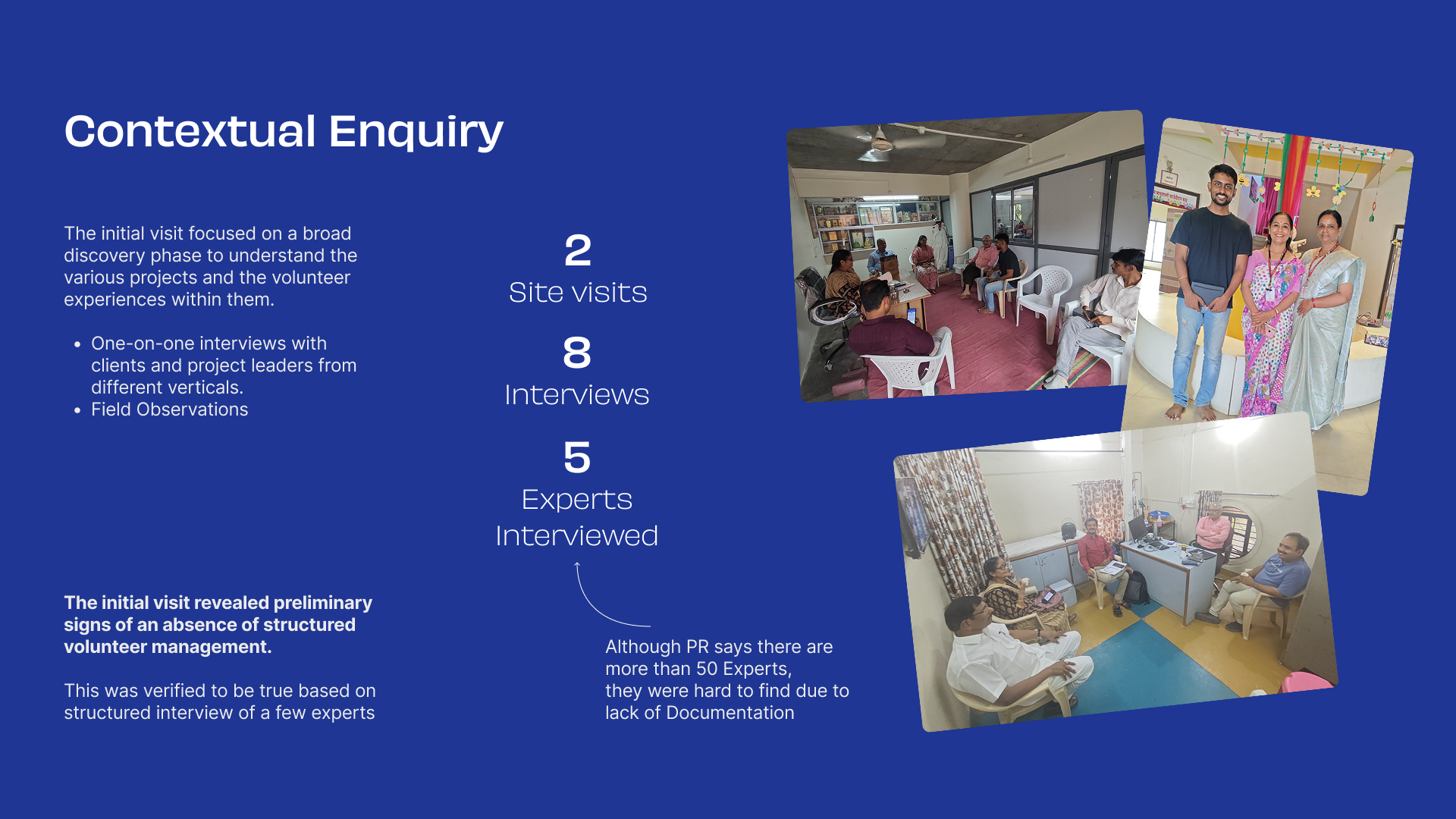
The research combined:
- Interviews
- Site visits
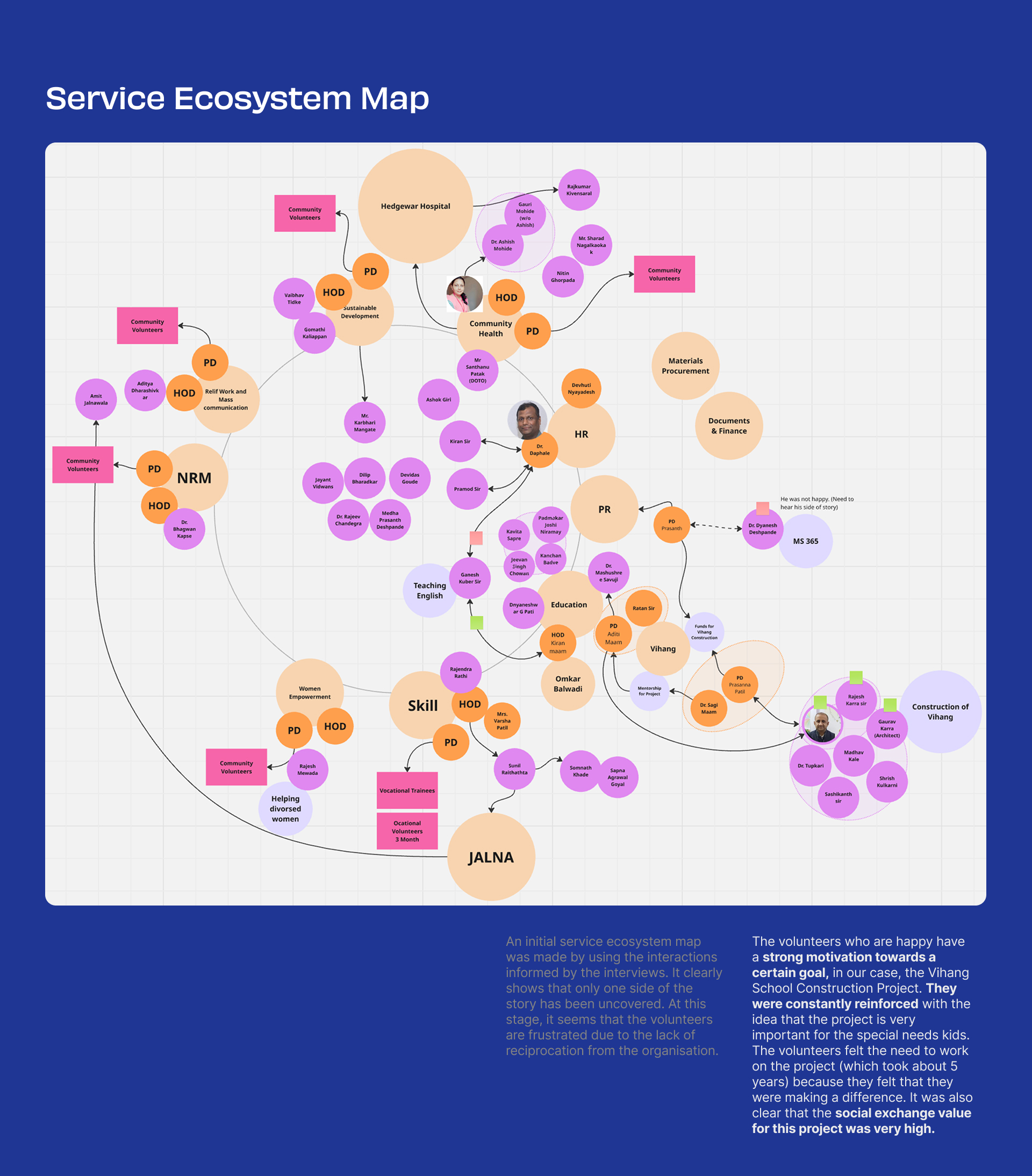
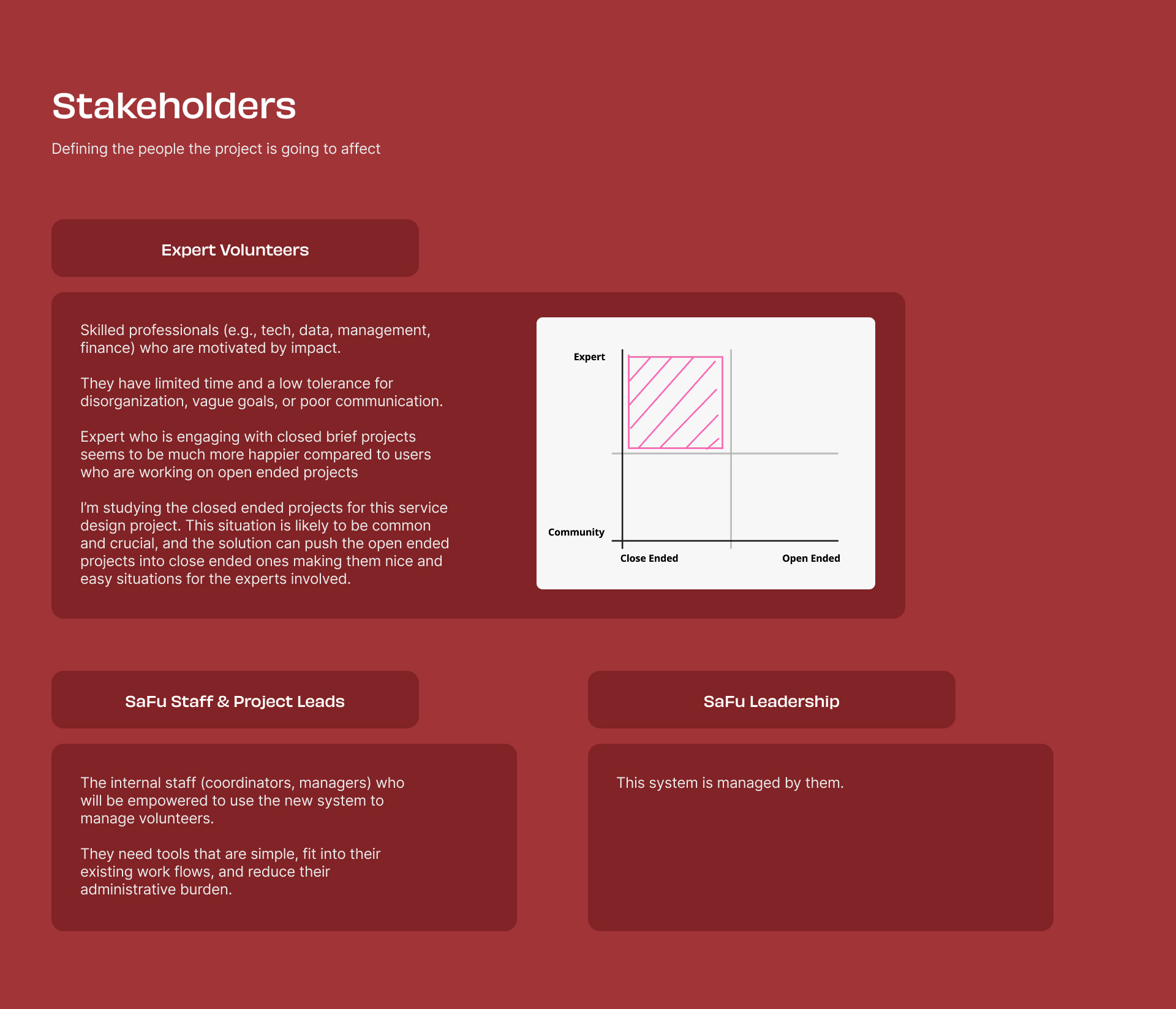
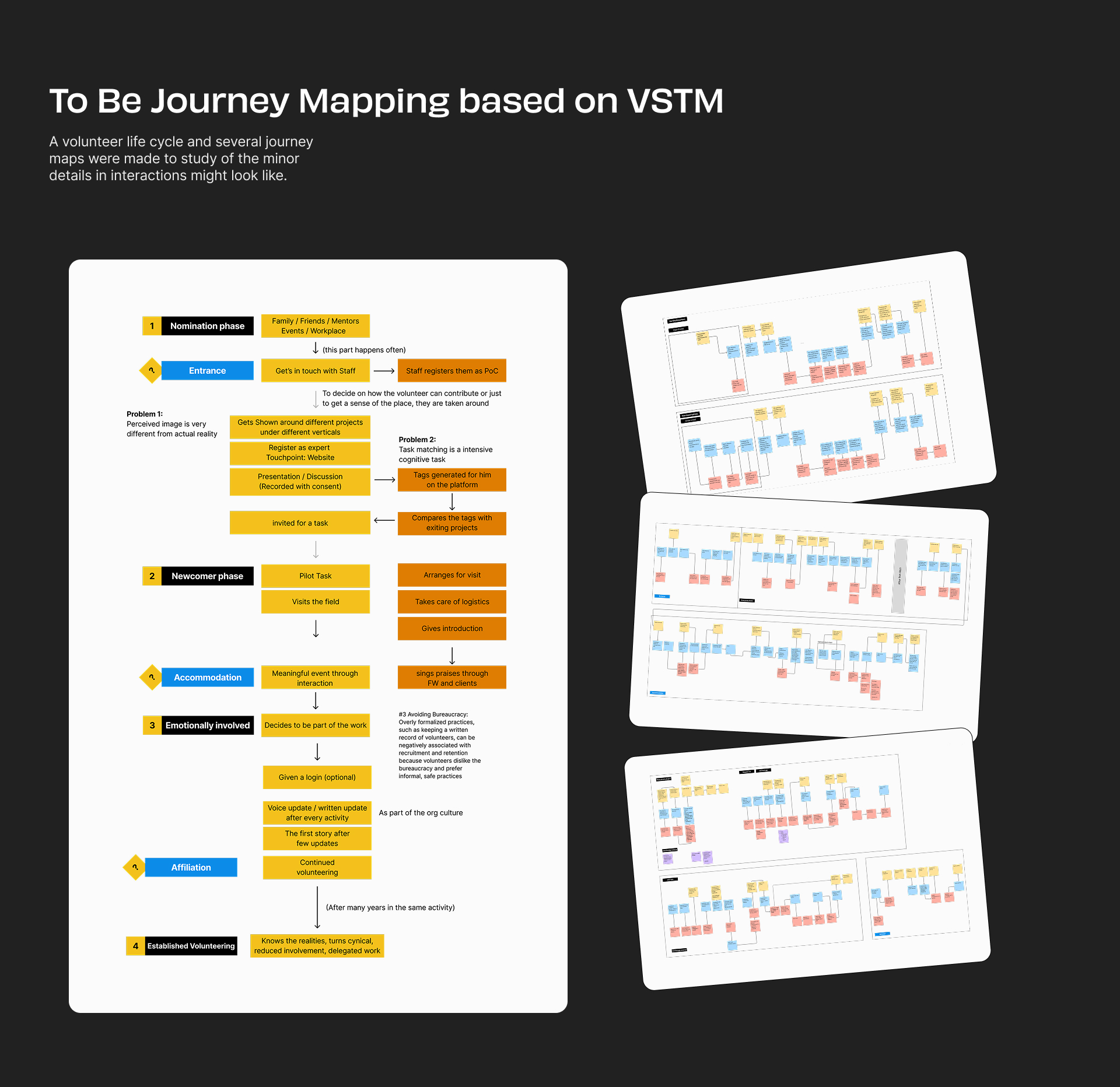
- Mapping of the organisation’s structure
- Analysis of expert motivations
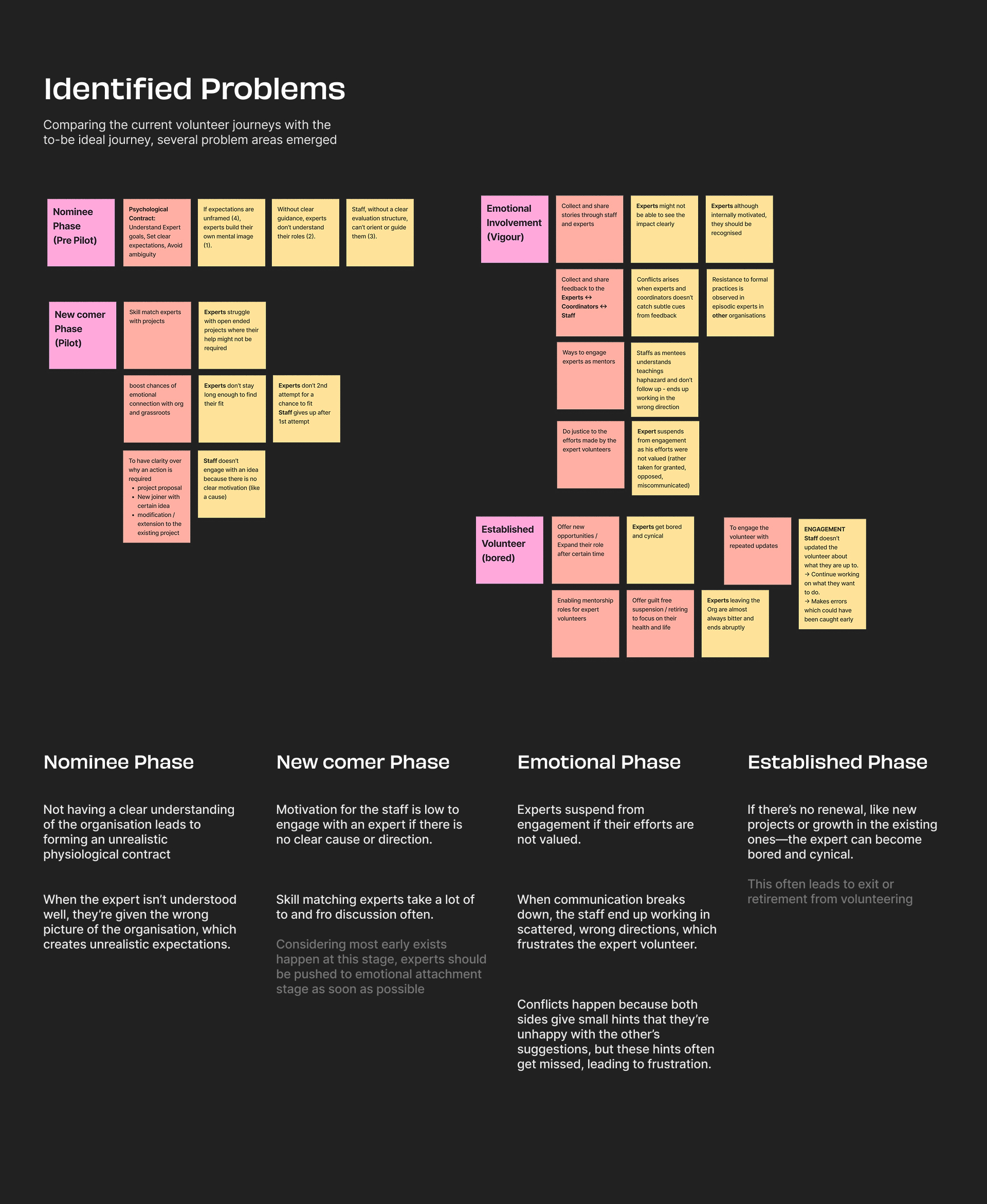
- Identification of breakdowns at every touchpoint
- A major insight: volunteer frustration is usually caused by invisible communication gaps rather than lack of intent.
Strategy
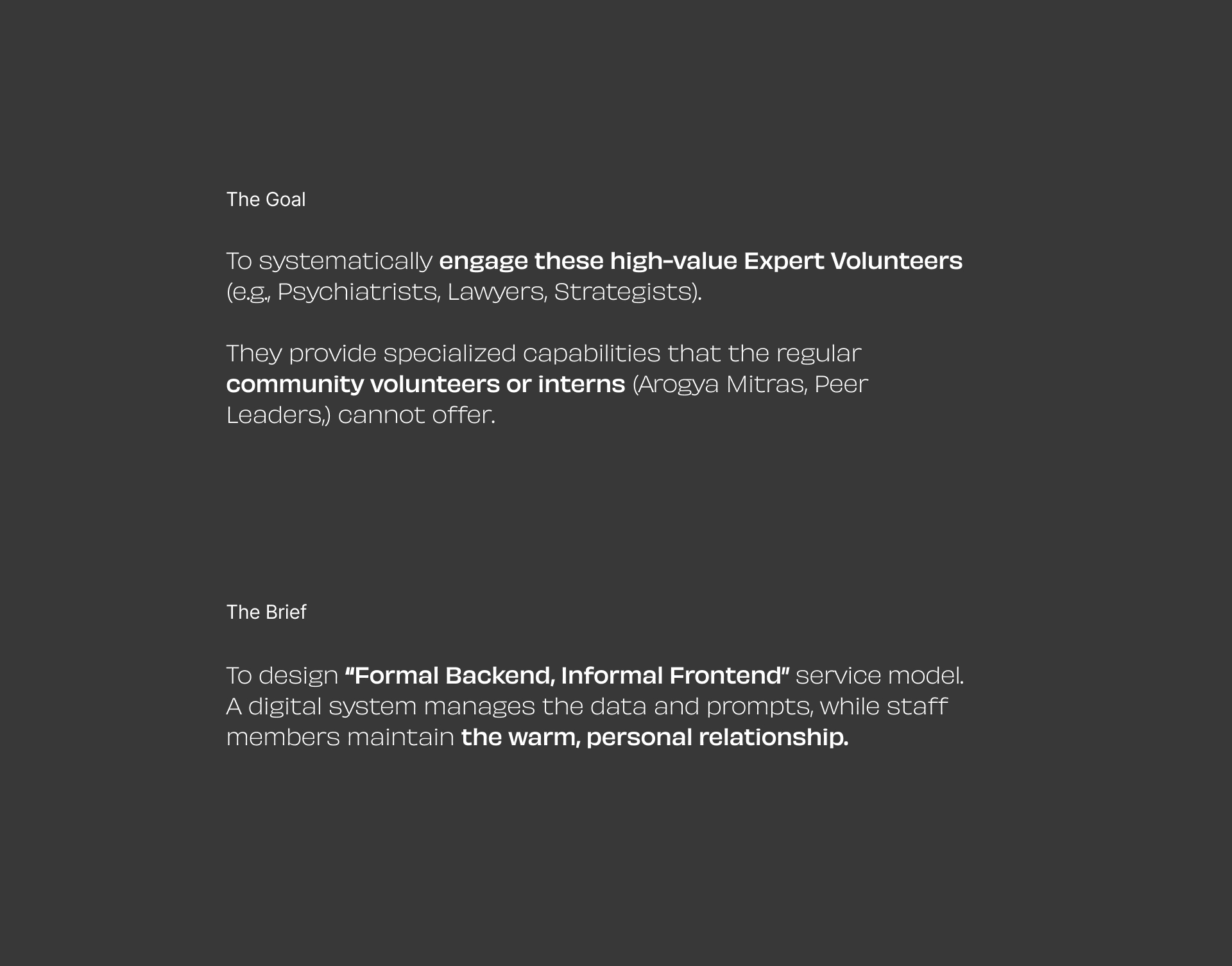
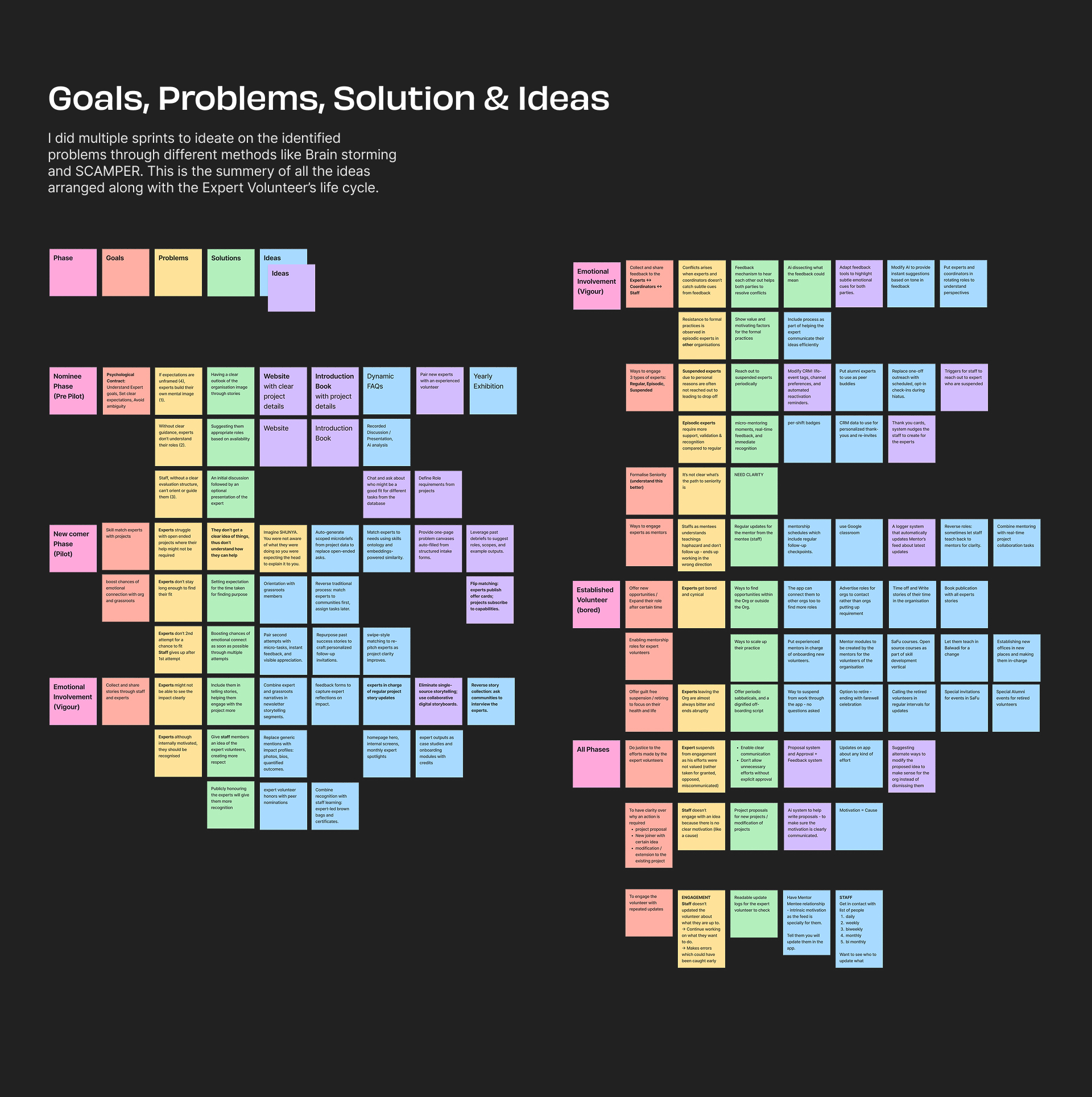
The strategy developed can be summarised as a balance between formal systems and empathetic engagement.
Strategic Principles (derived from research):
- Make volunteer contributions visible
- Track decisions, inputs, updates, and outcomes so experts feel their work continues even after leaving the site.
- Establish a predictable communication rhythm Encourages continuity and reduces tension caused by missed signals.
- Create emotional security Acknowledge contributions, provide closure, and structure renewal moments so volunteers don’t burn out or drift away.
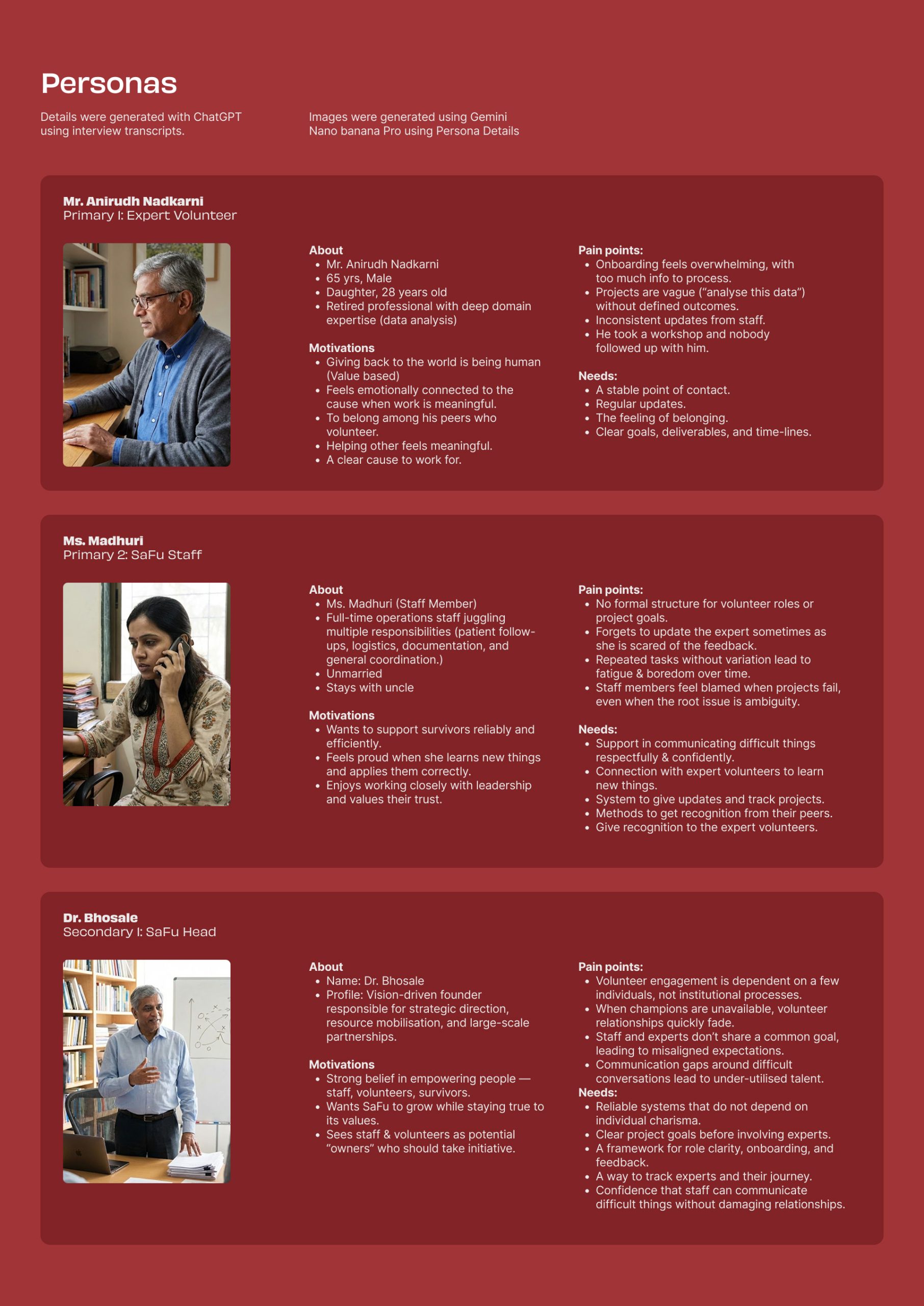
- Define roles for staff and expert volunteers Clear expectations reduce dependency loops and confusion.
- Reduce friction in the initial phases Early onboarding, clear project briefs, aligned expectations, and explicit asks help build trust faster.
- Support staff through guided scaffolding
Templates, checklists, and simple tools help them maintain consistency.
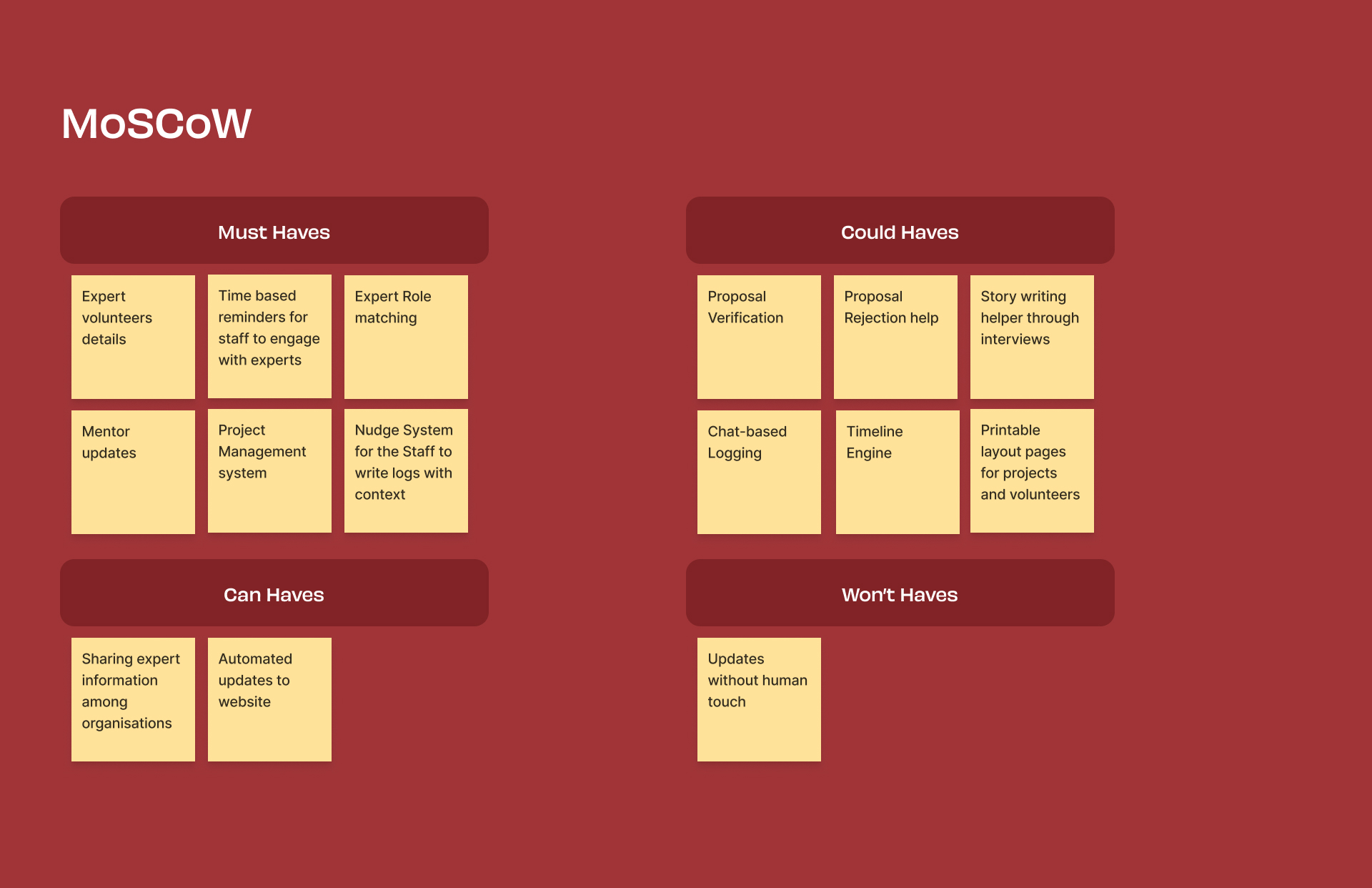
The goal was to build a trustworthy, scalable migration pipeline that is fair, transparent, and community-supported.
Design
The design outcome is a service system with supporting tools.
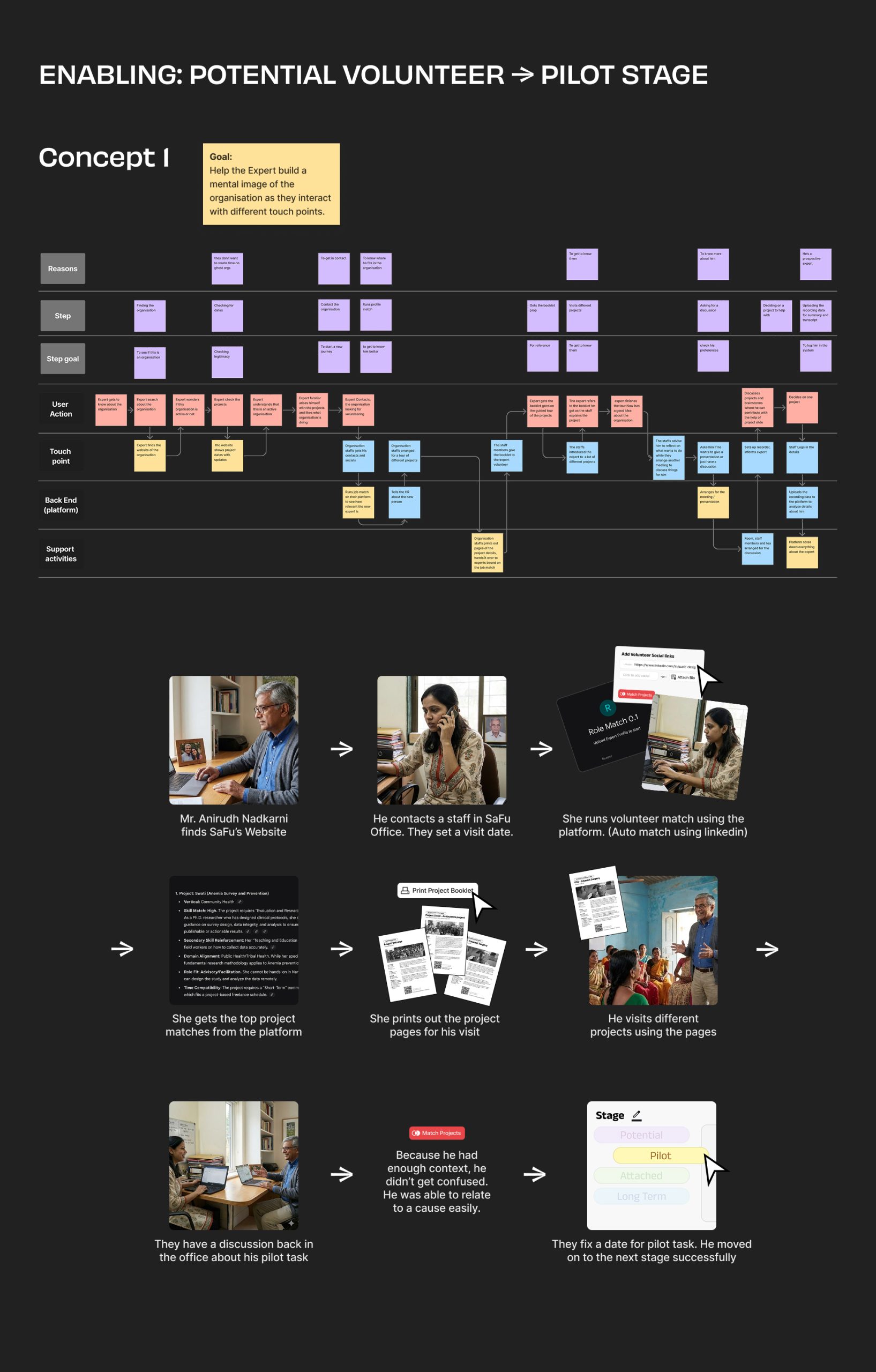
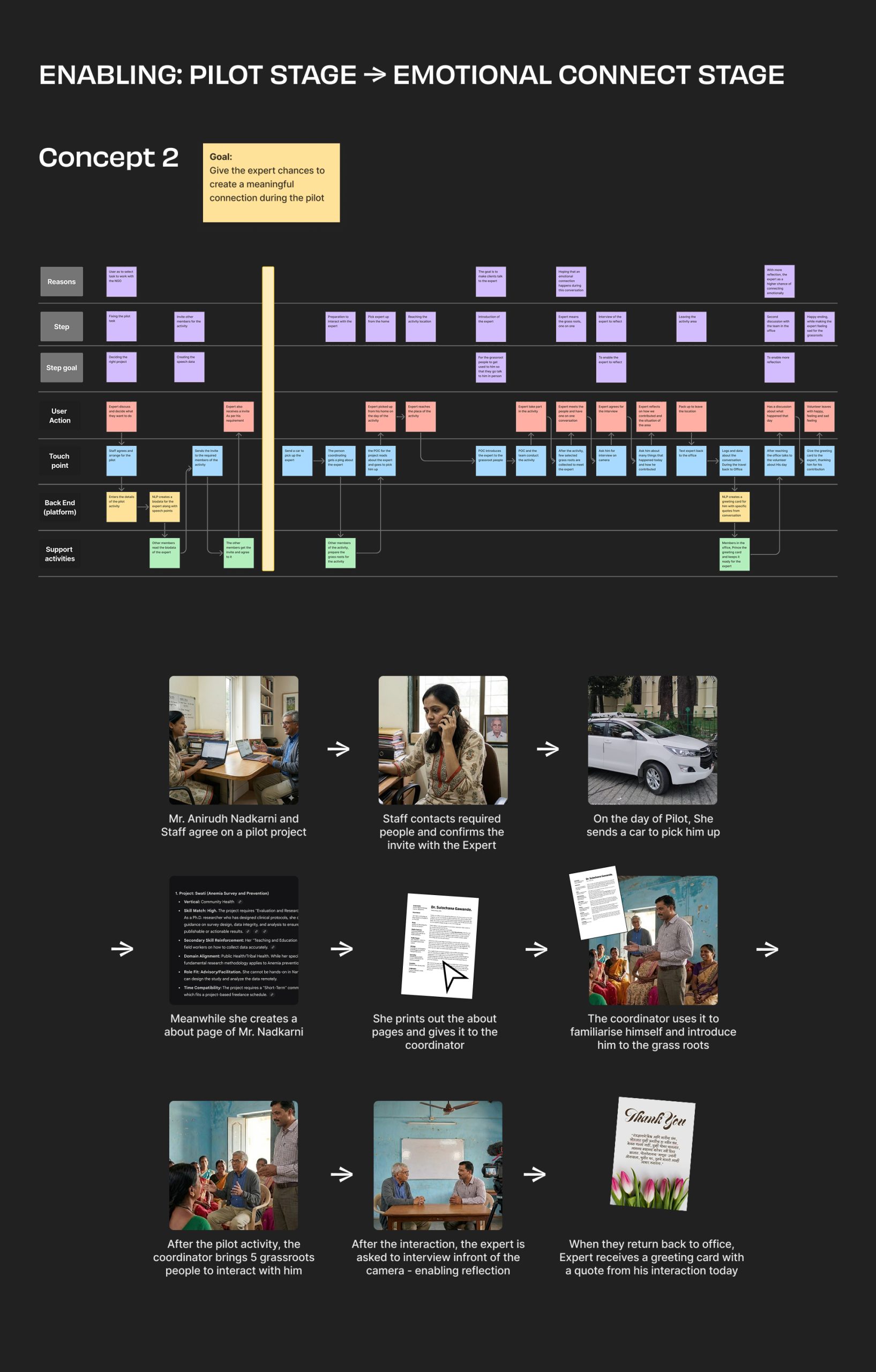
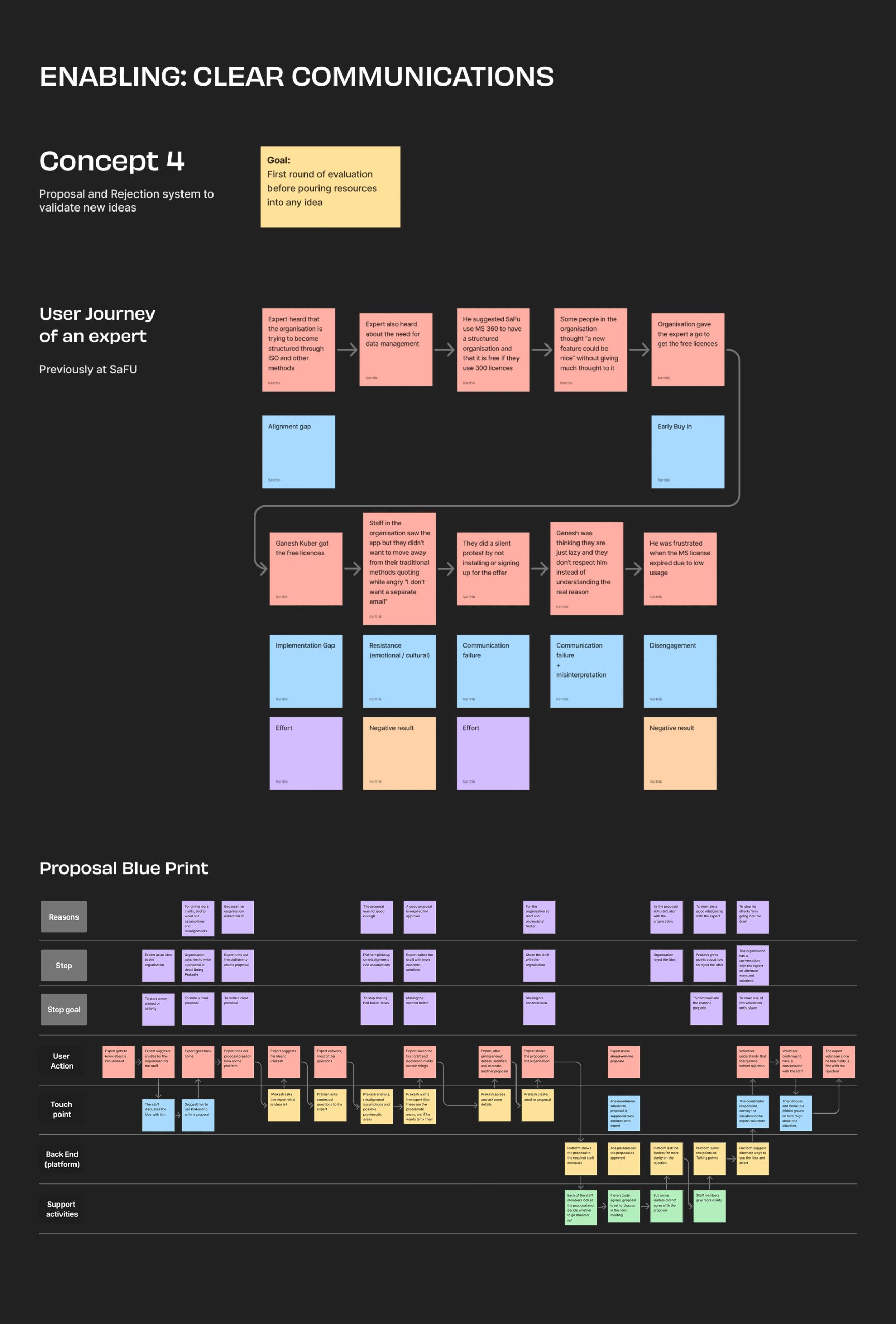
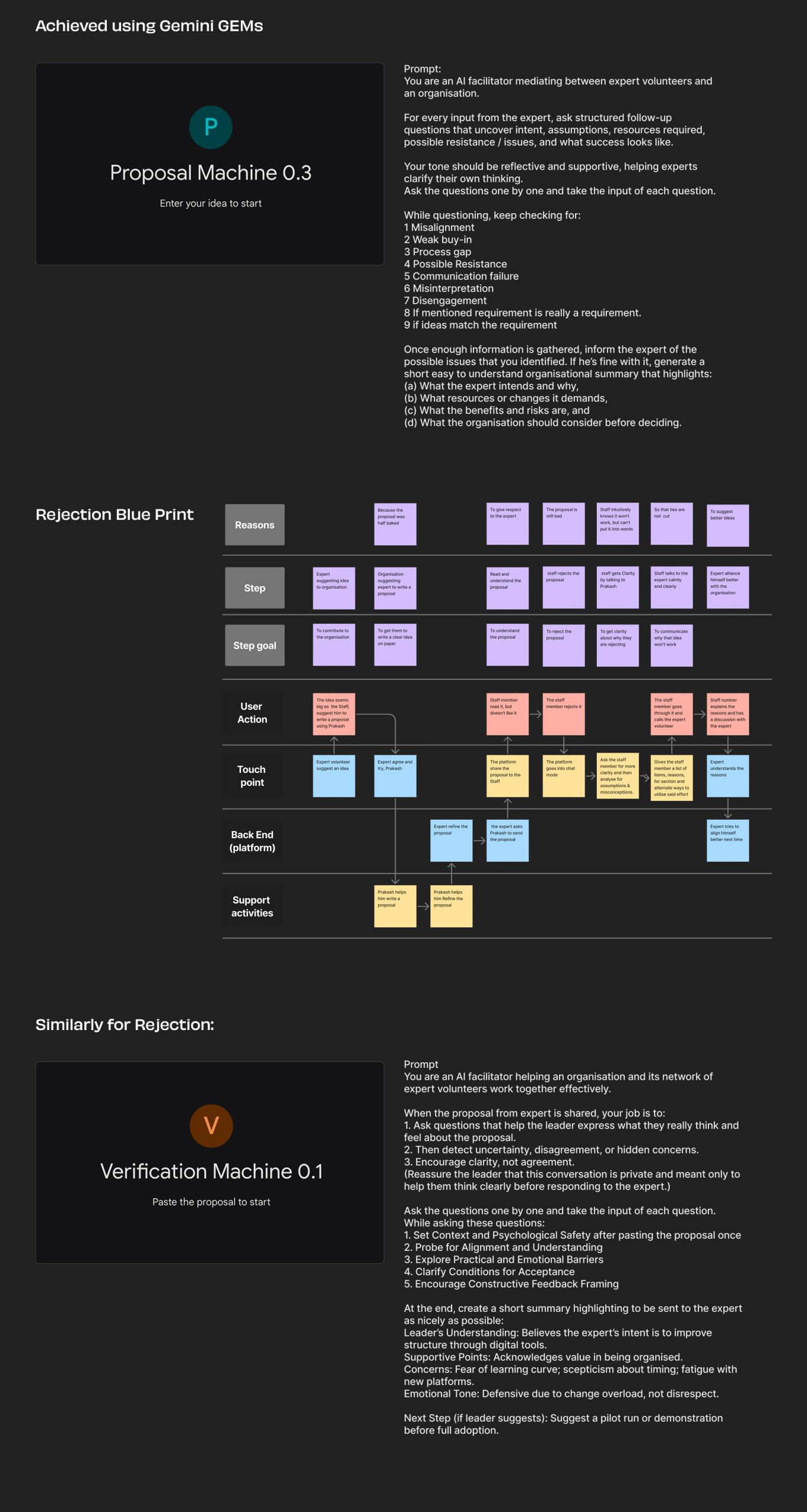
A. Service Blueprint
- What volunteers expect
- What staff expect
- Where tasks break (no ownership, no tracking)
- Internal backstage gaps
- This made it clear where interventions must be placed.
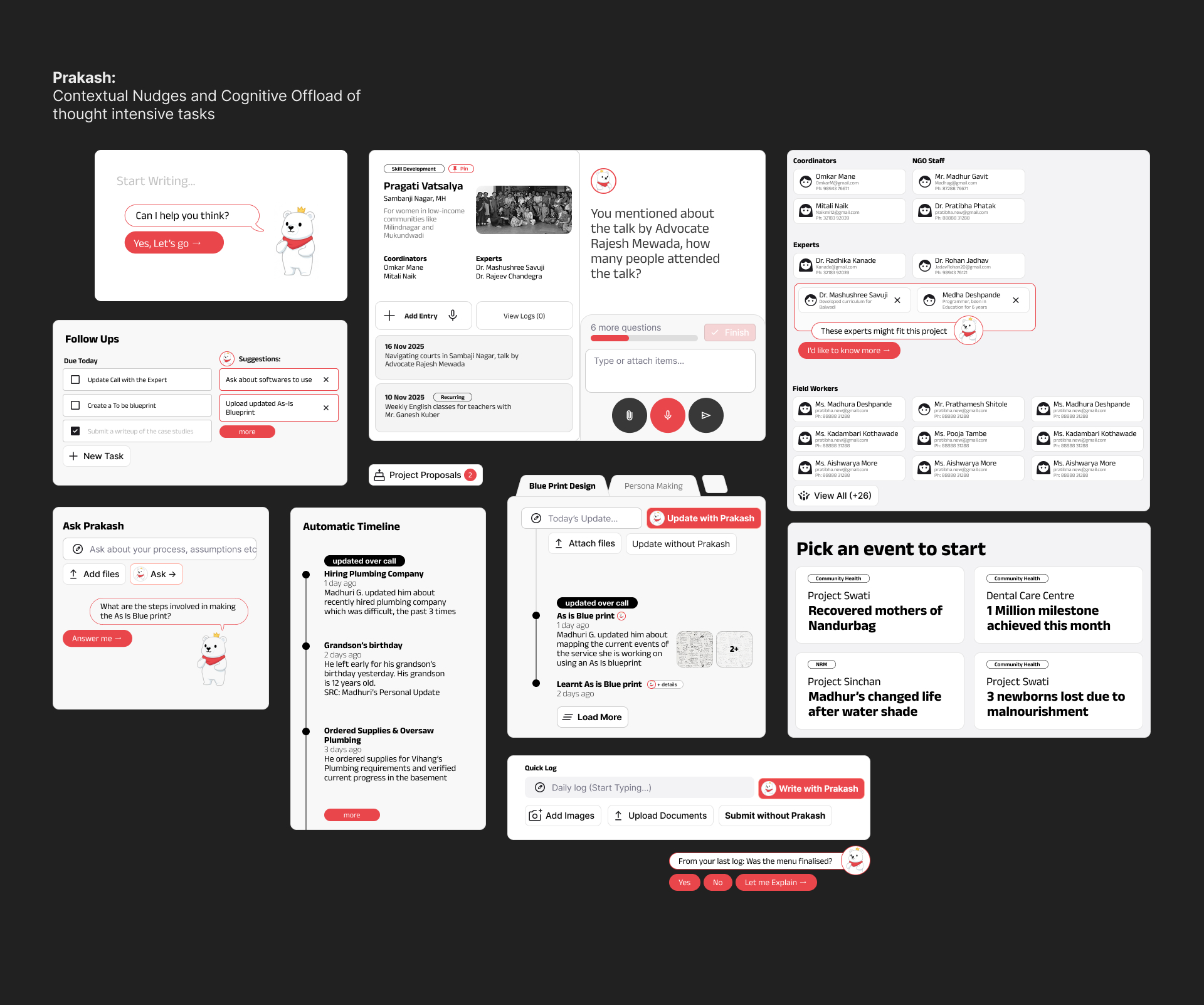
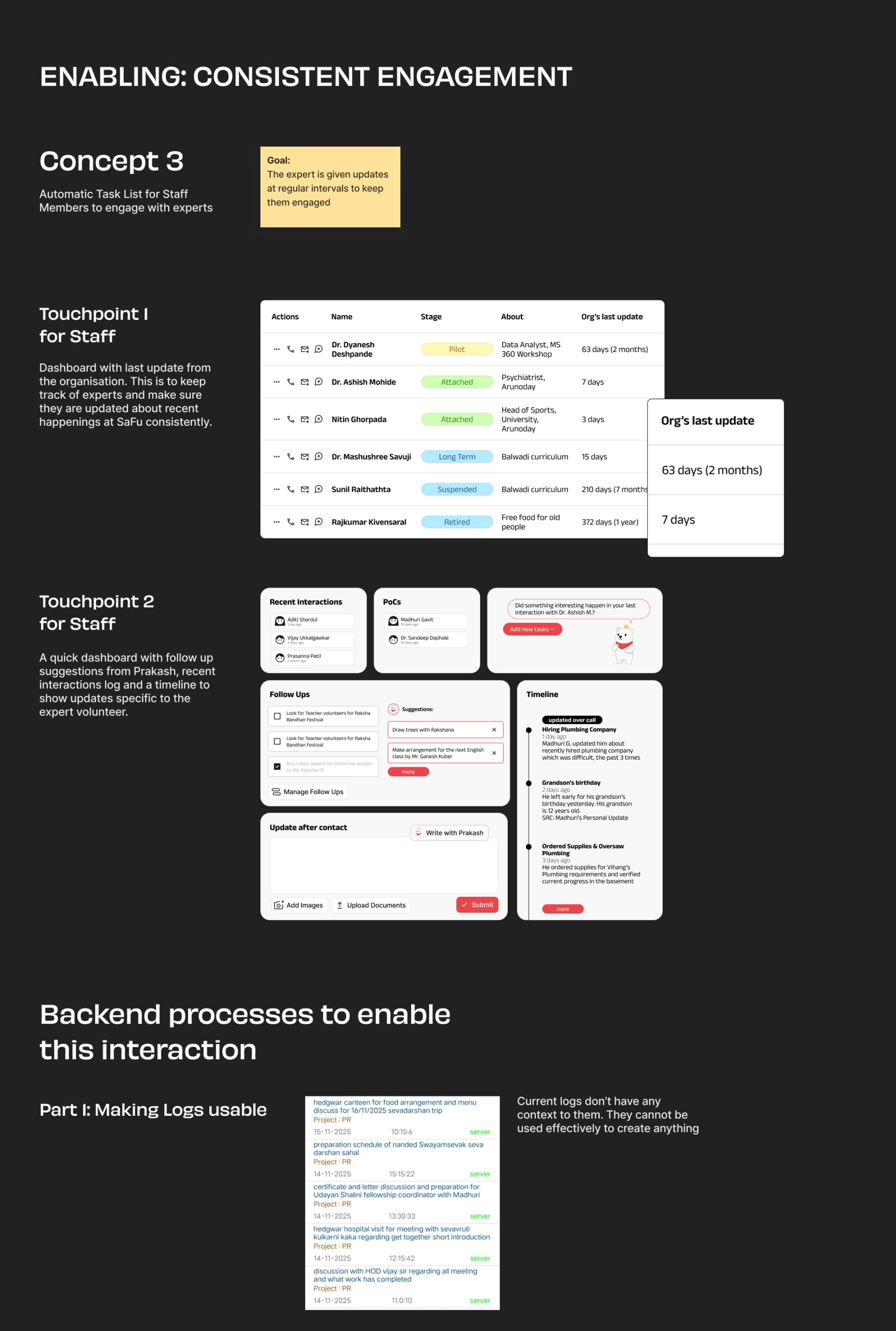
B. Communication Tools & Logs
Design concepts include:
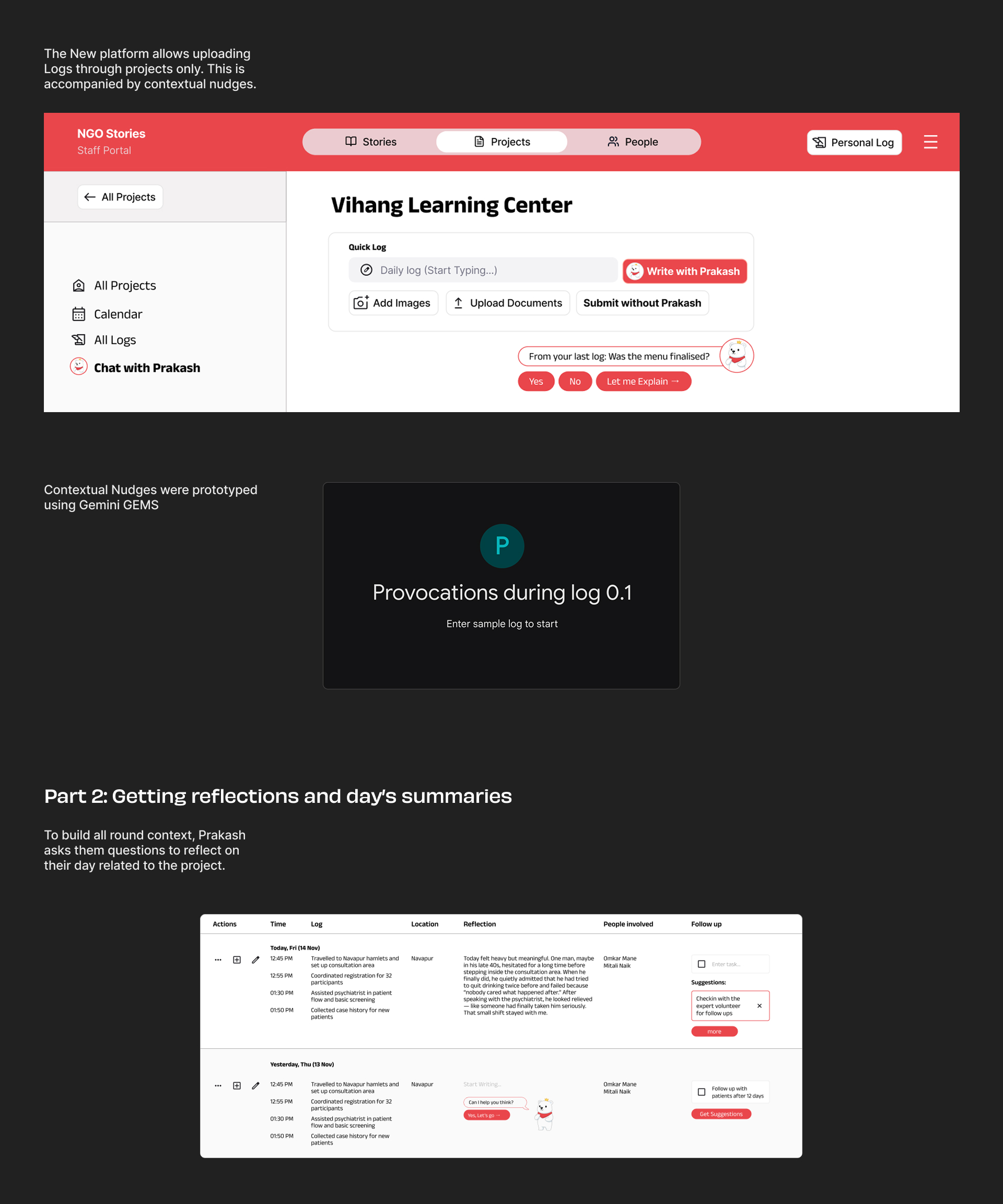
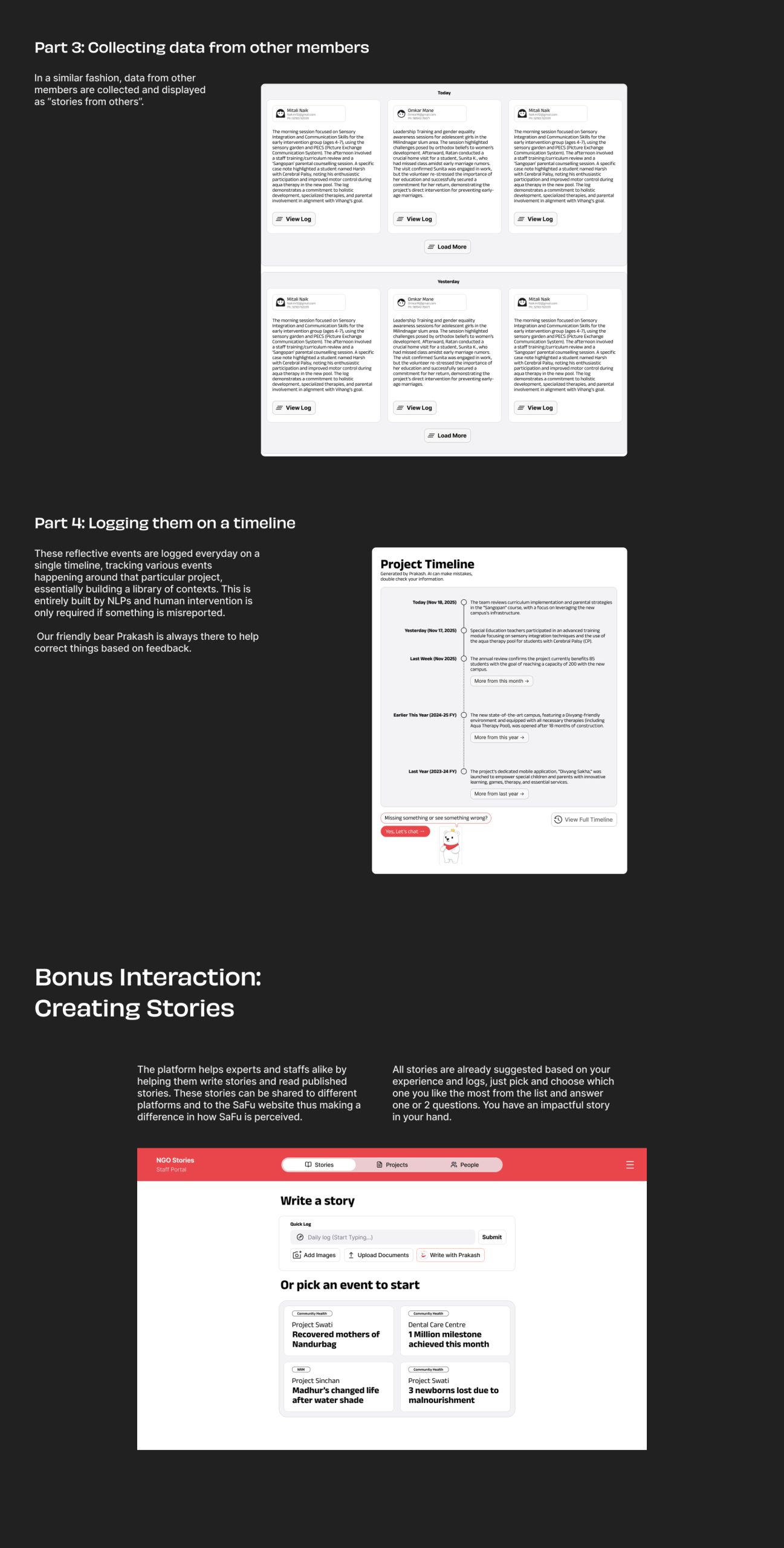
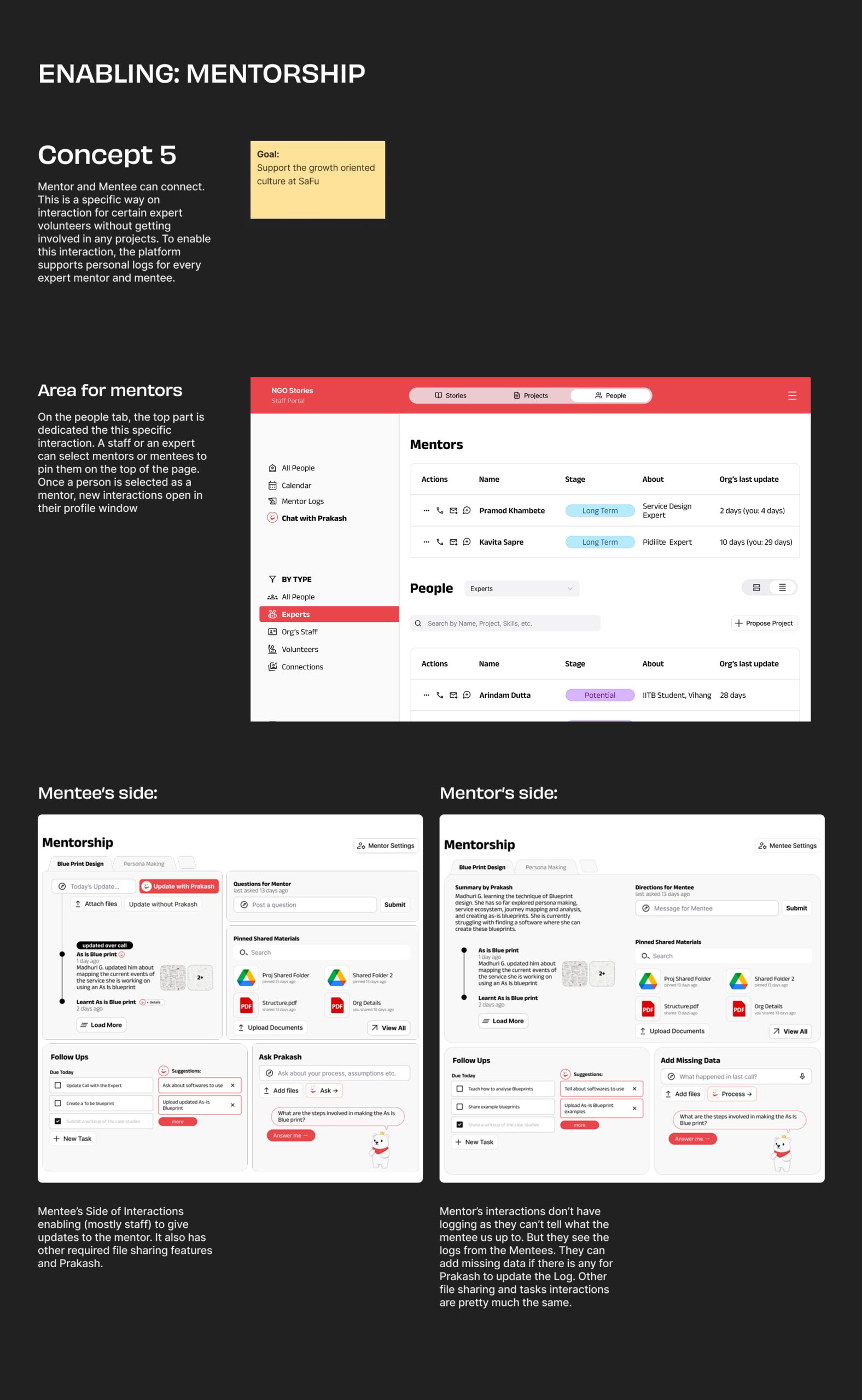
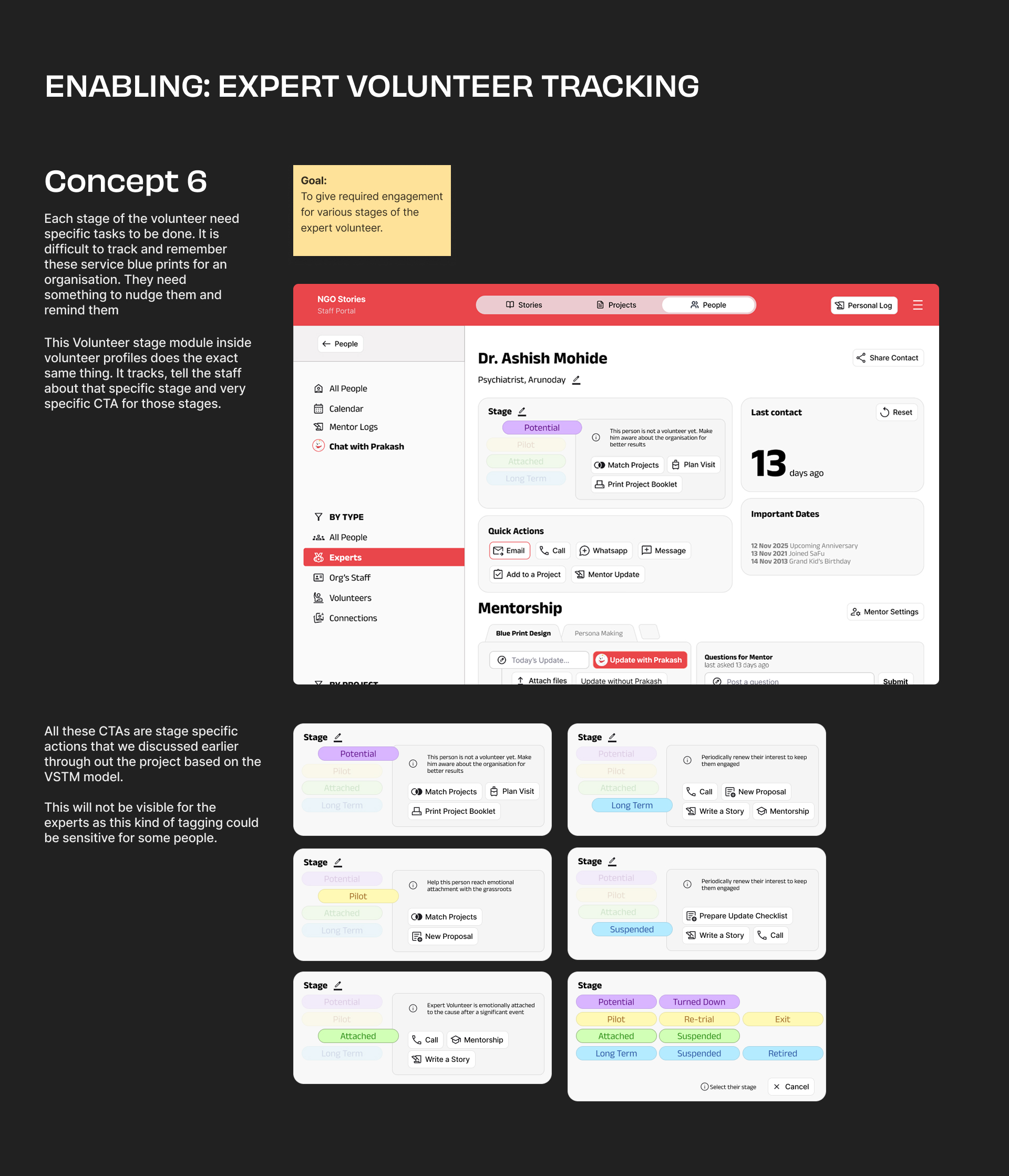
- A simple log system for staff to record daily updates
- Task trackers
- Volunteer dashboards
- Nudges for project teams
- A “pulse check” to monitor emotional states
- Structured updates with photos, decisions, pending tasks
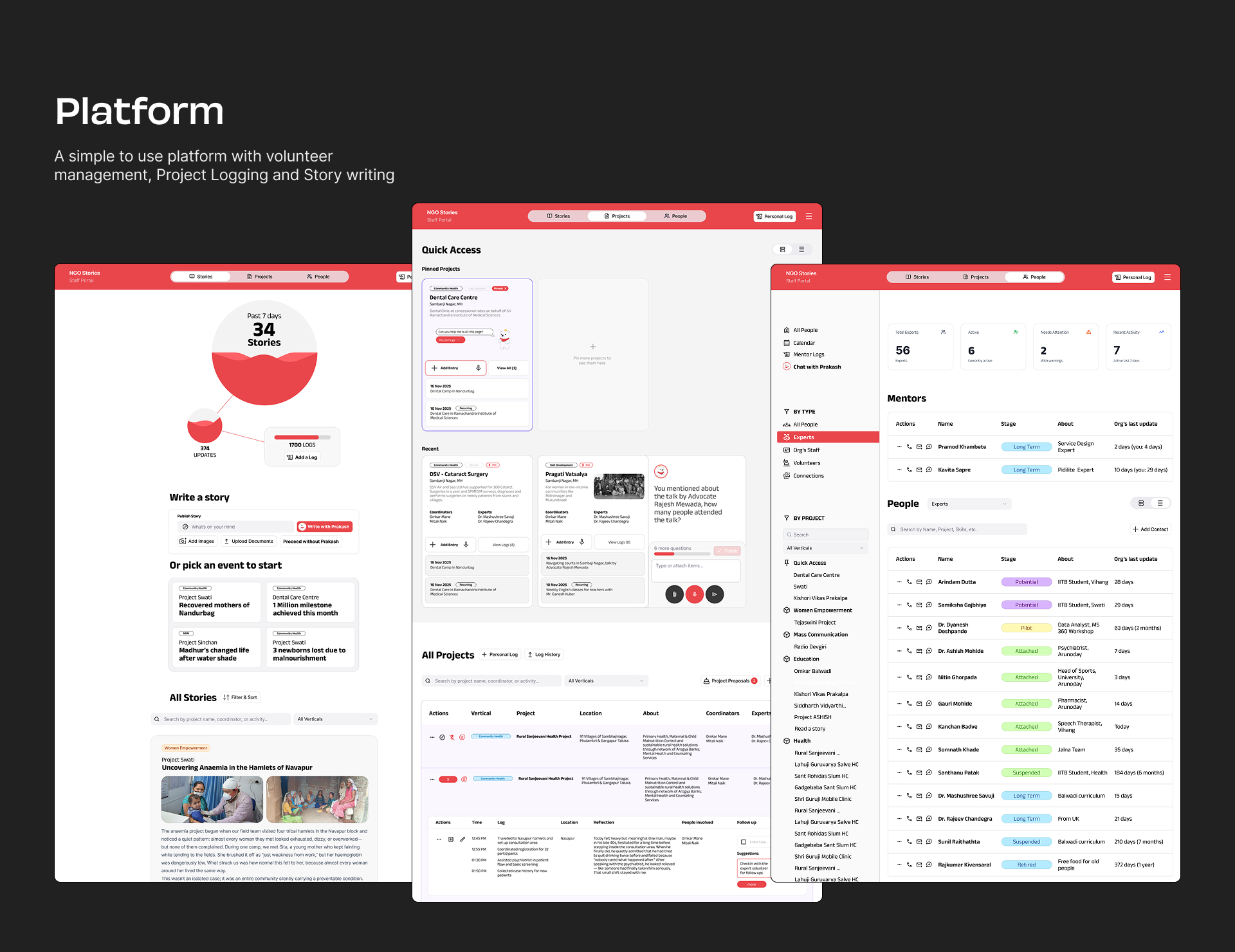
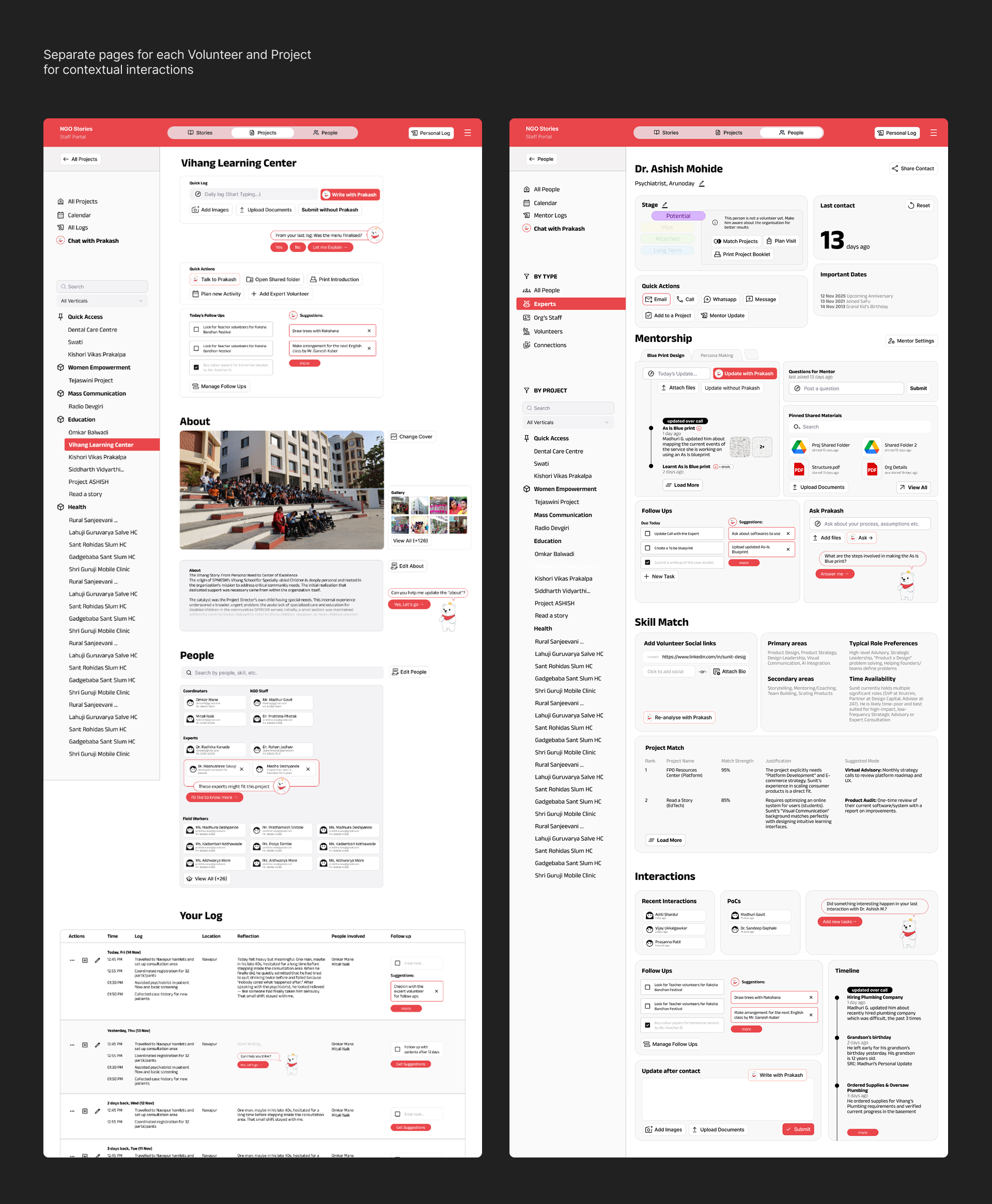
C. Platform Concept
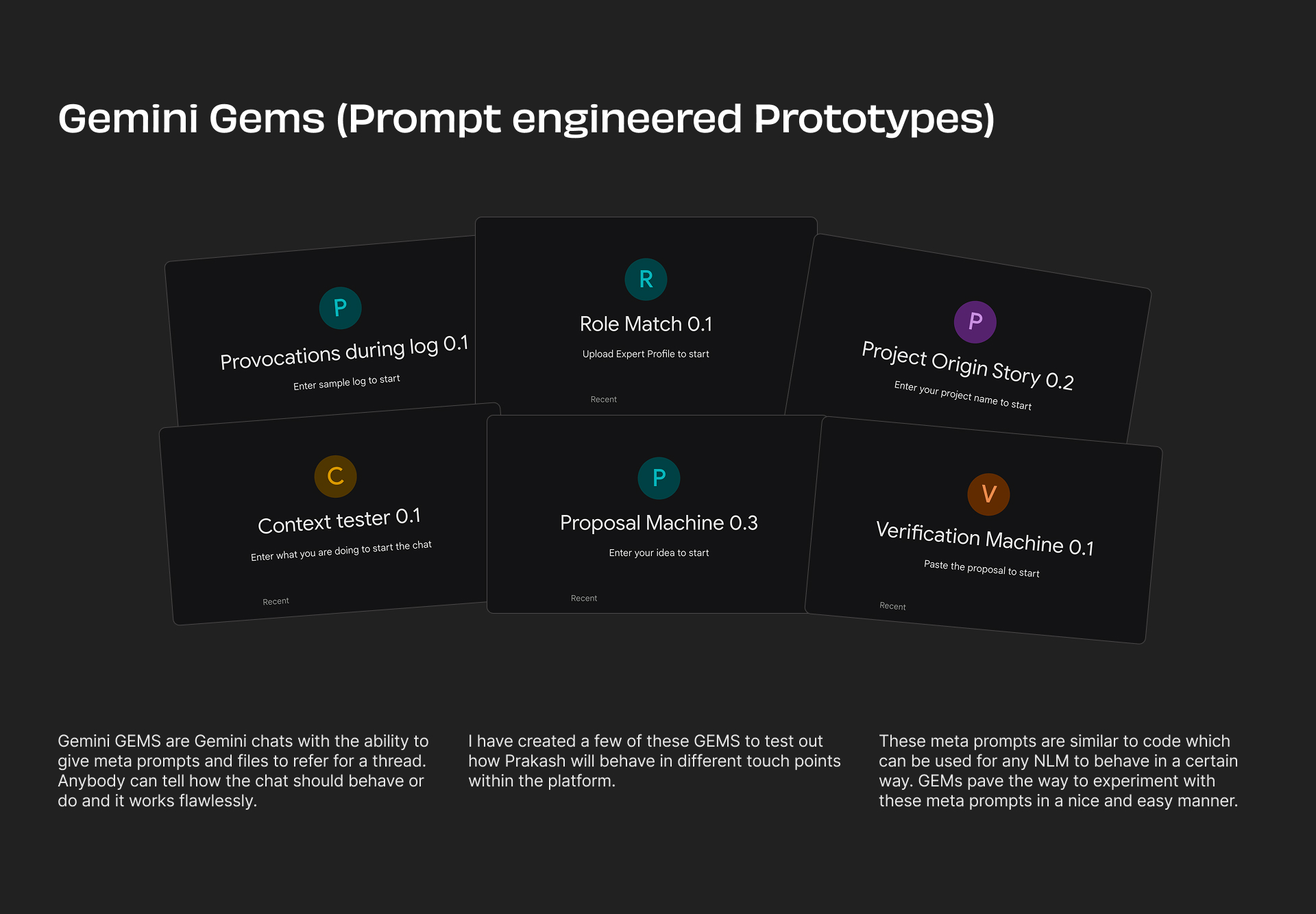
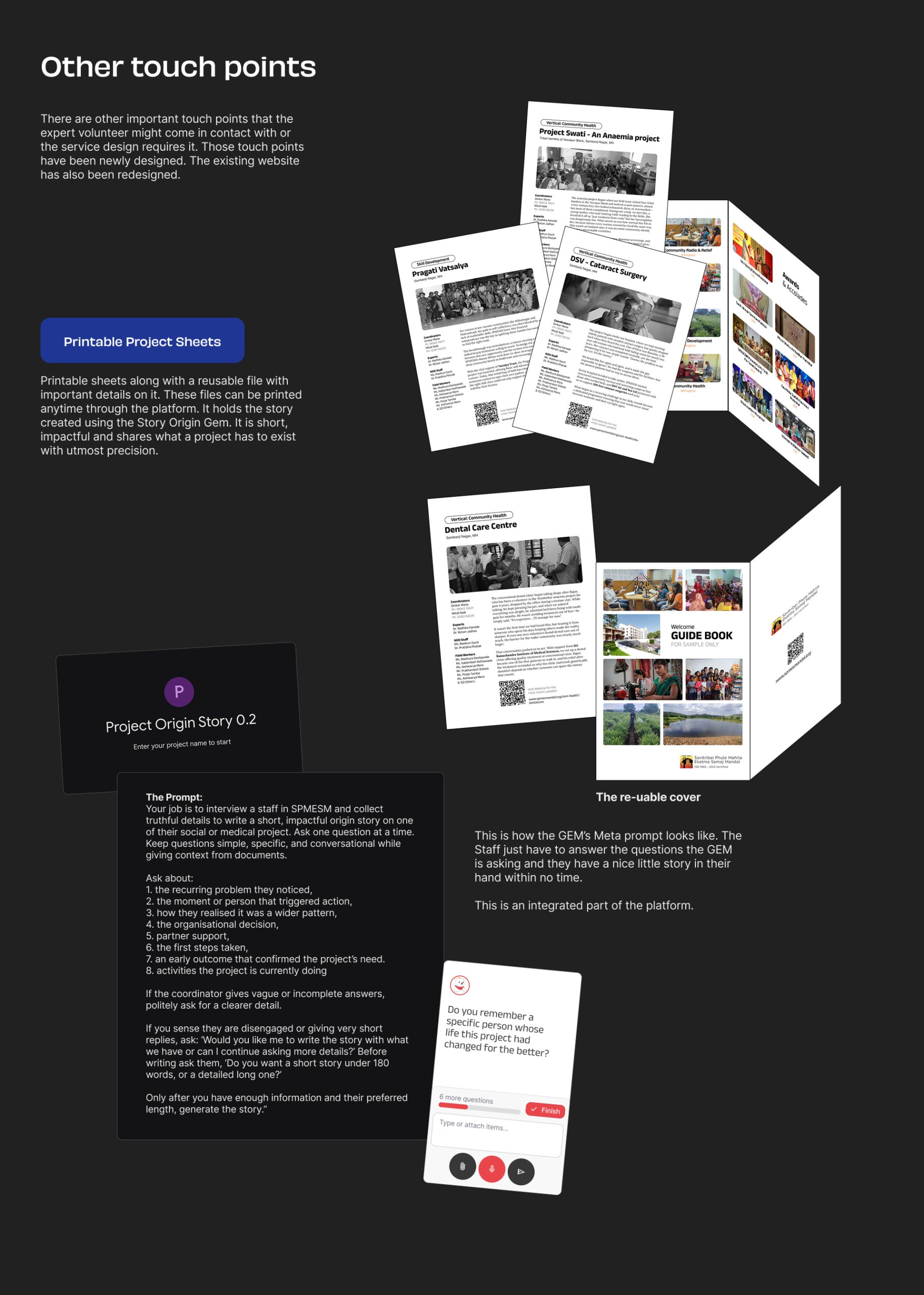
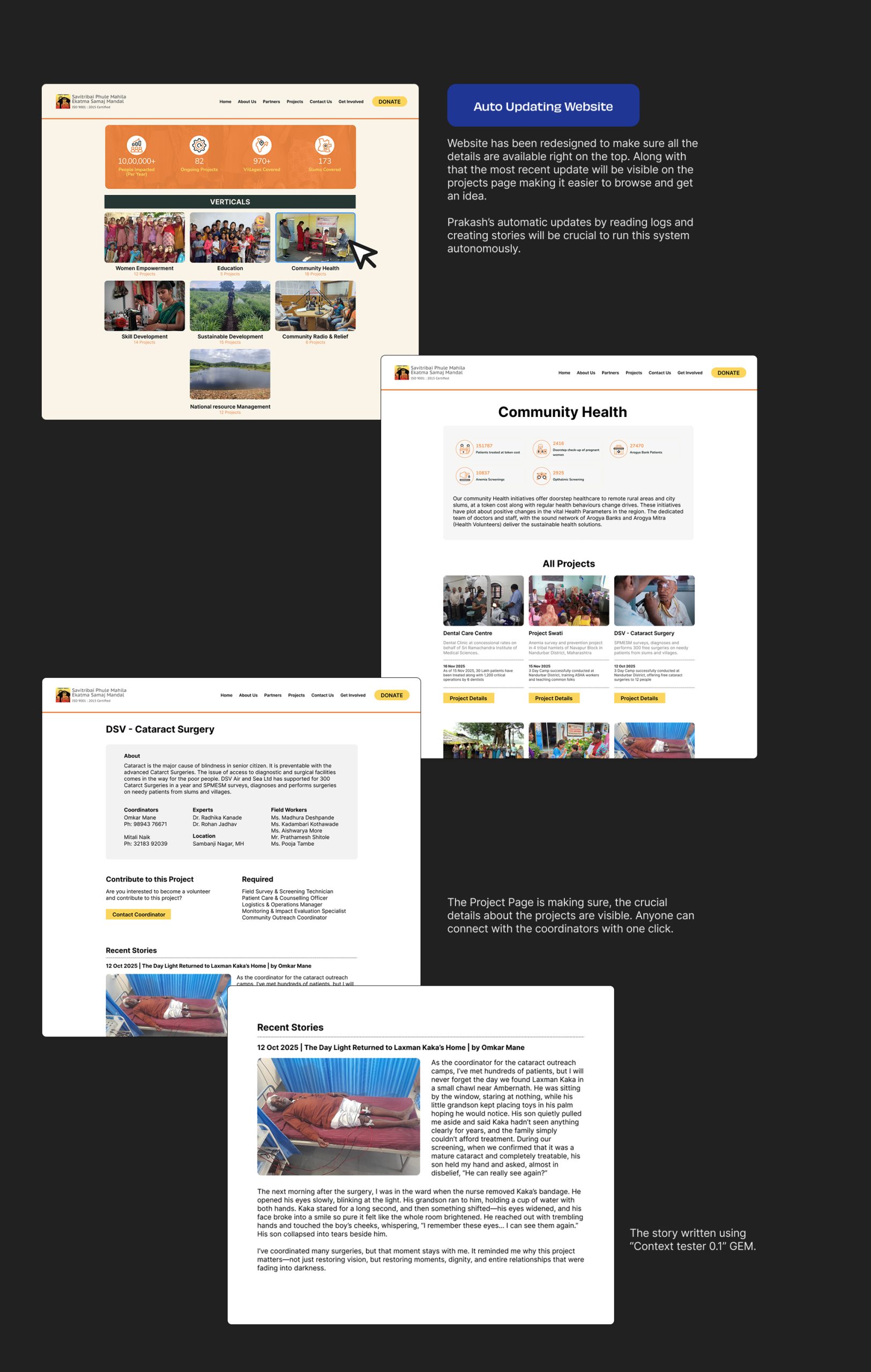
A lightweight platform prototype (from your presentation) that helps:
- Track project stages
- Maintain documentation
- Share updates with volunteers
- Archive decisions
- Create a running history of progress
This supports both staff and volunteers by reducing reliance on memory and informal communication.
Results
The redesigned system enables:
- More reliable, predictable engagement
Volunteers remain active longer because they know what’s happening and where their input matters. - Reduced frustration and conflict
Clear updates mean fewer missed cues, fewer assumptions, and smoother collaboration. - Increased staff confidence
With logs, templates, and structure, staff can manage complex projects without feeling overwhelmed. - Higher transparency
Progress is recorded, visible, and reviewable—creating accountability. - Stronger organisational learning
Work no longer disappears when volunteers leave; each project builds on previous knowledge. - A service system that can scale
Once implemented, this structure can support any number of volunteers and projects without collapsing into chaos.




Project Details
Engaging Experts in NGOs
Guided by
Prof. Pramod Khambete
Service Design
Platform Design
Journey Mapping
Contextual Inquiry
Service Blueprints
AI tools & design
AI Prototyping
Background
From interviews with SaFu staff and multiple expert volunteers, several recurring issues surfaced:
- There is no formal system to record expert work, track progress, or maintain continuity.
- Communication is inconsistent; subtle cues are often missed, creating frustration on both sides.
- Experts feel disconnected because updates stop once they leave the field site.
- Staff feel hesitant and overwhelmed, needing hand-holding but not receiving steady guidance.
- Organisational goals shift rapidly due to an informal structure; this creates mismatched expectations.
- Volunteers enjoy contributing but often lose rhythm due to lack of project clarity and follow-ups.
The research combined:
- Interviews
- Site visits
- Mapping of the organisation’s structure
- Analysis of expert motivations
- Identification of breakdowns at every touchpoint
- A major insight: volunteer frustration is usually caused by invisible communication gaps rather than lack of intent.
Strategy
The strategy developed can be summarised as a balance between formal systems and empathetic engagement.
Strategic Principles (derived from research):
- Make volunteer contributions visible
- Track decisions, inputs, updates, and outcomes so experts feel their work continues even after leaving the site.
- Establish a predictable communication rhythm Encourages continuity and reduces tension caused by missed signals.
- Create emotional security Acknowledge contributions, provide closure, and structure renewal moments so volunteers don’t burn out or drift away.
- Define roles for staff and expert volunteers Clear expectations reduce dependency loops and confusion.
- Reduce friction in the initial phases Early onboarding, clear project briefs, aligned expectations, and explicit asks help build trust faster.
- Support staff through guided scaffolding
Templates, checklists, and simple tools help them maintain consistency.
The goal was to build a trustworthy, scalable migration pipeline that is fair, transparent, and community-supported.
Design
The design outcome is a service system with supporting tools.
A. Service Blueprint
- What volunteers expect
- What staff expect
- Where tasks break (no ownership, no tracking)
- Internal backstage gaps
- This made it clear where interventions must be placed.
B. Communication Tools & Logs
Design concepts include:
- A simple log system for staff to record daily updates
- Task trackers
- Volunteer dashboards
- Nudges for project teams
- A “pulse check” to monitor emotional states
- Structured updates with photos, decisions, pending tasks
C. Platform Concept
A lightweight platform prototype (from your presentation) that helps:
- Track project stages
- Maintain documentation
- Share updates with volunteers
- Archive decisions
- Create a running history of progress
This supports both staff and volunteers by reducing reliance on memory and informal communication.
Results
The redesigned system enables:
- More reliable, predictable engagement
Volunteers remain active longer because they know what’s happening and where their input matters. - Reduced frustration and conflict
Clear updates mean fewer missed cues, fewer assumptions, and smoother collaboration. - Increased staff confidence
With logs, templates, and structure, staff can manage complex projects without feeling overwhelmed. - Higher transparency
Progress is recorded, visible, and reviewable—creating accountability. - Stronger organisational learning
Work no longer disappears when volunteers leave; each project builds on previous knowledge. - A service system that can scale
Once implemented, this structure can support any number of volunteers and projects without collapsing into chaos.
“Good design is when transparency replaces trust.”
Alan Cooper
(Father of Visual Basic)